Dental Implants in Karachi: A Fixed Answer to Loose Dentures
If your denture slips when you talk, rocks when you chew, or needs adhesive just to get through a meal, you are not alone. Many patients who ask us about dental implants in Karachi are not chasing a perfect smile; they simply want to eat, speak, and laugh without worrying that their teeth will move. Dental implants can often give a denture something solid to hold on to, or replace missing teeth with fixed crowns, so everyday life feels normal again. The first step is an honest assessment of your gums, jawbone, and general health by a qualified dentist.
What are dental implants?
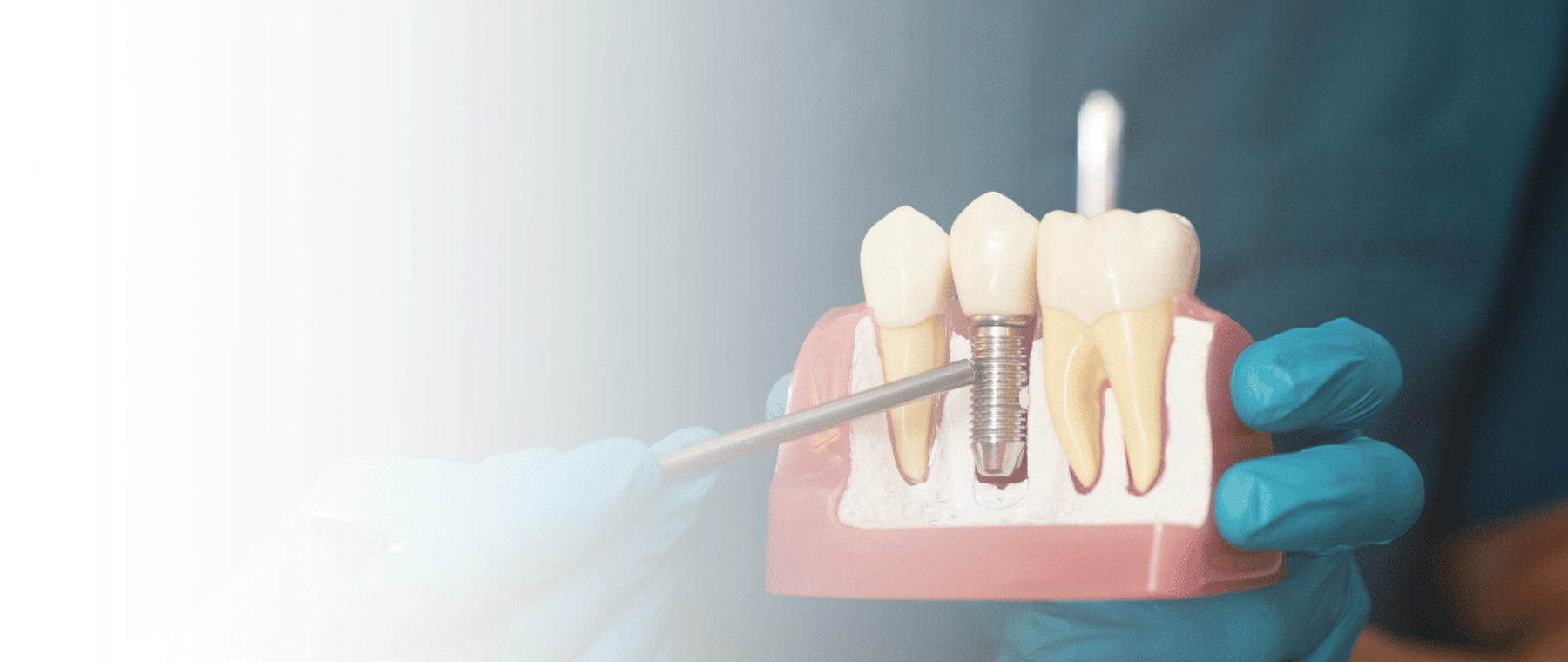
A dental implant is a small titanium or zirconia post placed in the jawbone where a tooth root used to be. Over several months, the bone usually bonds to its surface, a process called osseointegration. Once healed, the implant can support a single crown, a bridge, or a full denture, giving the replacement teeth a stable, fixed foundation.
Unlike a conventional denture, which rests on the gums and relies on suction or adhesive, an implant transfers chewing forces into the bone. That difference is why implant treatment may feel closer to natural teeth for many patients, although every mouth is different and your dentist will explain what is realistic for you. You can read more about the treatment itself on our dental implants page.
Why dentures become loose, and how implants may help
After teeth are lost, the ridge of bone that once held them gradually shrinks. A denture that fit well on day one can become loose over the years as the gums and bone beneath it change shape. Relining can help for a while, but the underlying bone loss usually continues.
In our clinic, we regularly see patients who have stopped eating meat, nuts, or raw vegetables because their lower denture will not stay in place. For many of these patients, two or more implants can act as anchors that the denture clips on to. This is called an implant-retained overdenture.
The research here is encouraging. A 2021 review in Clinical Implant Dentistry and Related Research reported that implant-supported overdentures are associated with higher bite force, better chewing efficiency, and meaningful improvements in quality of life compared with conventional dentures (Van de Winkel et al., 2021). The same review points to the long-standing McGill consensus statement, which suggests that a lower denture retained by two implants should be considered a first-choice option when a conventional lower denture is not staying in place.
Types of dental implants in Karachi
Depending on how many teeth are missing and the condition of your bone, your dentist may discuss:
- Single-tooth implant: one implant and one crown to replace a single missing tooth, without reshaping the neighboring teeth.
- Implant-supported bridge: two or more implants supporting a row of replacement teeth.
- Implant-retained overdenture: a removable denture that clips on to two to four implants for noticeably better stability.
- Fixed full-arch bridge: a non-removable set of teeth supported by several implants, for patients with enough bone and suitable general health.
Who is a good candidate for dental implants?
Dental implants are often suitable for adults who have lost one or more teeth, or who struggle with a loose denture, and who have healthy gums and enough jawbone to support an implant. Good general health and a willingness to keep up home care and regular checkups matter just as much.
Implants are not the right fit for everyone. Your dentist may recommend delaying or avoiding implant treatment if you have:
- Active gum disease or untreated decay, which should be treated first
- Poorly controlled diabetes or other medical conditions that affect healing
- Heavy smoking, which is linked with a higher risk of implant failure
- Significant bone loss, which may need bone grafting before an implant can be placed
- Ongoing treatment with certain medications, such as some bone-strengthening drugs, which your dentist will review with you
If implants are not suitable right now, a well-made conventional or partial denture can still be a good option, and your dentist can talk you through the alternatives.
How dental implant treatment works at DentoCorrect
Treatment is planned in stages so that each step can be checked before moving on. A typical journey looks like this:
- Consultation and examination: your dentist reviews your medical history, checks your gums and remaining teeth, and discusses your goals.
- Imaging and planning: X-rays and, where needed, a 3D CBCT scan help measure bone height and width and map nearby nerves and sinuses.
- Implant placement: the implant is placed under local anesthesia. Most patients describe pressure rather than sharp pain, and discomfort afterward is usually manageable with simple painkillers.
- Healing: the bone typically needs around three to six months to bond with the implant. A temporary tooth or your existing denture may be adjusted so you are not left without teeth.
- Final restoration: once healed, a crown, bridge, or overdenture attachment is fitted and your bite is checked.
- Follow-up and maintenance: regular reviews and professional cleanings help protect the implant over the long term.
For recovery tips, our guide on managing dental implant pain covers what is normal in the first few days and when to call your dentist.
How long do dental implants last?
With good care, dental implants can last many years. A 2024 meta-analysis in Clinical Oral Investigations estimated that roughly four out of five implants were still functioning after 20 years, and it identified smoking as one of the factors linked with a higher risk of failure (Kupka et al., 2024). Crowns and denture attachments may wear sooner and need replacing over time, which is normal.
Keeping implants healthy is similar to caring for natural teeth: brush twice a day, clean around the implants with floss or interdental brushes, avoid smoking, and keep up your regular checkups.
Dental implants in Karachi at our PECHS clinic
Our Karachi branch is at Shop No. 1, Family Heaven Apartment, Main Shaheed-e-Millat Road, Modern Society P.E.C.H.S., Karachi 75100. Its central location on Shaheed-e-Millat Road puts it within easy reach of Tariq Road, Bahadurabad, Dhoraji, Gulshan-e-Iqbal, and Shahrah-e-Faisal.
Patients in Karachi often choose DentoCorrect because:
- Treatment is carried out by PMDC-registered dentists, and our Karachi team includes a consultant oral and maxillofacial surgeon and implantologist
- We follow ISO-certified clinical protocols for hygiene and sterilization
- Treatment plans and costs are explained clearly before any procedure begins
- We offer the full range of options, from single implants to implant-retained dentures, so the plan fits your needs rather than a fixed package
You can find directions and contact details on our Karachi clinic page.
Dental implant cost in Karachi
At DentoCorrect Karachi, a single dental implant starts from 80,000, and implant-retained dentures start from 200,000. Your final quote depends on the number of implants, the implant system, the type of crown or denture, and whether bone grafting or extra imaging is needed.
For context, published prices from Karachi clinics in 2026 commonly fall between about PKR 150,000 and PKR 350,000 per implant, and some quotes cover only the implant post rather than the abutment and crown. When comparing prices, it is worth asking exactly what each quote includes.
The most accurate way to know your cost is a consultation, where your dentist can examine your mouth and give you a written treatment plan.
Frequently Asked Questions
Does getting a dental implant hurt?
Implant placement is done under local anesthesia, so most patients feel pressure rather than pain during the procedure. Some soreness and swelling are common for a few days afterward and can usually be managed with over-the-counter painkillers and cold compresses. Your dentist will give you aftercare instructions and a number to call if anything feels unusual.
How long does dental implant treatment take?
From consultation to the final tooth, treatment usually takes about three to six months, because the bone needs time to bond with the implant. If bone grafting is needed first, it may take longer. In some cases, a temporary tooth or adjusted denture can be worn while the implant heals, so you are not left without teeth.
Can implants fix my loose denture?
Often, yes. Two or more implants placed in the jaw can act as anchors that your denture clips on to, so it stays in place when you eat and speak. Your dentist will check whether you have enough bone, and whether your existing denture can be adapted or a new one is needed.
Am I too old for dental implants?
Age alone is rarely the deciding factor. Many older adults have implants placed successfully, especially to stabilize a lower denture. What matters more is your general health, bone quality, how well any medical conditions are controlled, and whether you can keep the area clean. Your dentist will review your medical history before recommending treatment.
How much does a dental implant cost in Karachi?
Published prices in Karachi commonly range from about PKR 150,000 to PKR 350,000 per implant, depending on the implant brand, the crown, and any extra procedures such as bone grafting. A consultation at DentoCorrect gives you an exact, written quote for your treatment.
How do I care for dental implants?
Care for implants much like natural teeth: brush twice daily, clean between teeth and around implants with floss or interdental brushes, and attend regular checkups and cleanings. Avoiding smoking and managing conditions such as diabetes may help protect the bone around the implant. Overdentures should also be removed and cleaned every day.
Book a dental implant consultation in Karachi
If a loose denture or missing teeth are affecting how you eat, speak, or smile, a consultation is the best place to start. Visit our PECHS clinic to find out whether dental implants in Karachi are right for you. Call +92 347 990 4276 or book online at dentocorrect.pk.