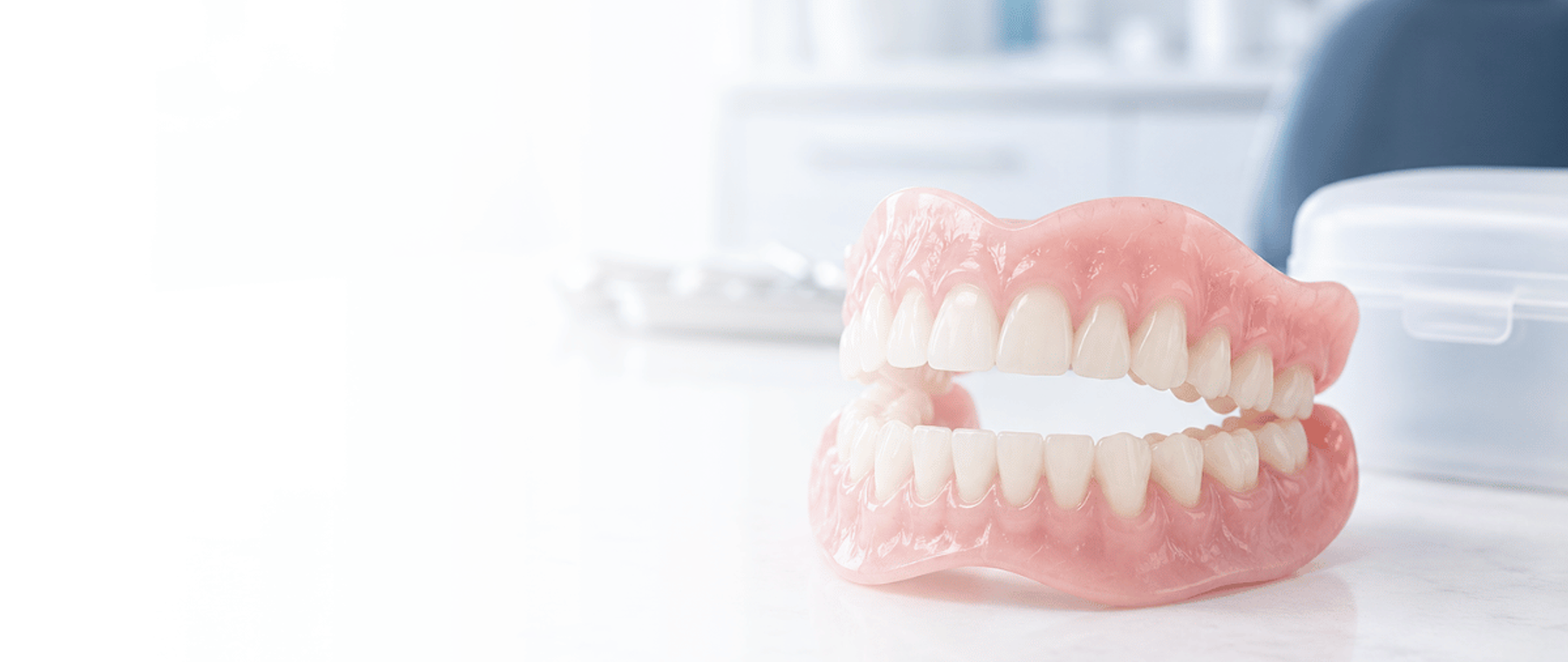

Dentures in Rawalpindi: Replace Old, Ill-Fitting Dentures
If your denture clicks when you speak, drops when you laugh, or needs more adhesive every month, it is probably not your fault and not something you simply have to live with. Dentures in Rawalpindi can be relined, remade, or stabilized with implants so that eating and speaking feel predictable again. Jawbone shrinks slowly after teeth are lost, so a denture that fitted well years ago will eventually sit loose. The right fix depends on how old your denture is, how much bone has changed, and what you want from it.
Why dentures become loose over time
A denture rests on the ridge of gum and bone left behind after teeth are removed. That ridge keeps remodeling for years, which is normal and happens to everyone. As it flattens, the denture that was moulded to the old shape no longer matches.
Common signs your denture needs attention:
- It slips when you talk, laugh, or eat
- You are using more adhesive than before, or applying it several times a day
- Sore spots or ulcers keep appearing in the same places
- Food packs underneath after most meals
- The teeth look worn flat, chipped, or stained
- Your face looks a little collapsed around the mouth
- The denture has been repaired more than once, or was made many years ago
In our Rawalpindi clinic, we regularly see patients relying on thick layers of adhesive to hold a denture that is 10 or 15 years old. Adhesive can help a well-fitting denture feel secure, but it cannot correct a denture that no longer matches the ridge, and it does not stop the bone change underneath.
Your options for an ill-fitting denture
Your dentist will examine the fit, your bite, and the health of your gums before recommending one of these:
- Reline: new material is added to the fitting surface so the denture matches your ridge again. This is the quickest and least expensive fix when the teeth and base are otherwise sound.
- Rebase: the whole base is replaced while your existing denture teeth are kept, useful when the acrylic is worn or repeatedly cracked.
- New complete or partial denture: the sensible choice when the teeth are worn, the bite has changed, or the denture is simply too old to adapt.
- Implant-retained overdenture: two or more implants act as anchors that the denture clips on to, which usually gives the biggest improvement in stability, especially for lower dentures.
- Fixed implant bridge: a non-removable option for patients with enough bone and suitable general health.
You can read more about the removable options on our dentures page, and about anchoring on our dental implants page.
How often should a denture be relined or replaced?
Here the honest answer matters more than a sales pitch. An evidence review notes that there are no evidence-based guidelines setting how often dentures should be relined or rebased, and little research on how long rebased dentures last (NCBI Bookshelf review). What clinicians see in practice is:
- Relines are often needed every one to three years, sooner in the first year after extractions when bone changes fastest
- Complete dentures are commonly replaced somewhere around five to ten years, depending on wear and how much the ridge has changed
- A yearly check lets your dentist catch sore spots, worn teeth, and early gum or tissue problems before they become painful
So rather than a fixed rule, ask your dentist to check the fit each year and advise you then.
Why a loose denture is worth fixing
- Chewing is less efficient, which often pushes people toward softer, less varied food
- Rubbing causes ulcers, and long-standing irritation should always be checked
- Unstable lower dentures can affect speech and confidence in company
- An uneven bite can strain the jaw joint and muscles
- Pressure from a poorly fitting base may speed up ridge resorption
For patients struggling most with a lower denture, research supports implants as an option: a review in Clinical Implant Dentistry and Related Research reported higher bite force, better chewing efficiency, and improved quality of life with implant-supported overdentures compared with conventional ones (Van de Winkel et al., 2021).
What to expect at your appointment
- Assessment: your dentist examines the denture, the fit, your bite, and the gum and ridge underneath, and checks the soft tissues.
- Discussion: you are told whether a reline, rebase, new denture, or implant option suits you, with the pros and cons of each.
- Impressions or scans: records are taken of your ridges and bite.
- Try-in: for a new denture, a wax try-in lets you check the tooth position, shade, and appearance before it is finished.
- Fitting: the finished denture is fitted, the bite checked, and pressure points adjusted.
- Review: a follow-up visit, usually within a week or two, to ease any sore spots.
Relines are often completed in one visit; a new denture usually needs several appointments over a few weeks.
Getting used to a new or relined denture
- Expect a settling-in period of one to several weeks, especially with a first denture
- Start with soft foods cut small, and chew on both sides at once to keep it stable
- Practice reading aloud for a few days if speech feels odd
- Return for adjustment if a sore spot develops rather than enduring it
- Take the denture out at night unless your dentist advises otherwise, and store it in water or a cleaning solution
- Clean it daily over a basin of water with a denture brush and mild soap, not abrasive toothpaste
- Rinse your mouth and clean any remaining teeth and your gums as well
- Keep annual checkups, even if you have no natural teeth left
Dentures in Rawalpindi at our Bahria Town clinic
Our Rawalpindi branch is at Wallayat Complex, Westminster School Road, Phase 7 Bahria Town, with free parking and easy access from Bahria Town Phases 1 to 7, Chaklala, Westminster Road, Rawat, Chakri Road, and nearby Islamabad sectors.
Patients in Rawalpindi often choose DentoCorrect because:
- Treatment is carried out by PMDC-registered dentists
- We follow ISO-certified clinical protocols for hygiene and sterilization
- We check whether a reline will do before recommending a new denture
- Try-in stages let you see the look before the denture is finished
- Costs and the number of visits are explained clearly before we start
For directions and contact details, visit our Rawalpindi clinic page.
Denture cost in Rawalpindi
The cost depends on:
- Whether you need a reline, rebase, or a completely new denture
- Complete or partial, and how many teeth are being replaced
- The material used for the base and the teeth
- Whether implants are planned to hold the denture in place
- Whether extractions or gum treatment are needed first
For context, published prices in Rawalpindi in 2026 commonly range from about PKR 30,000 for a basic partial denture to around PKR 150,000 for a premium complete set, with relines costing considerably less than a new denture. Implant-retained options cost more because of the implants themselves.
The most accurate way to know your cost is a consultation, where your dentist can examine the fit and tell you whether adjusting your current denture is realistic.
Frequently Asked Questions
Can my old denture be adjusted instead of replaced?
Often, yes. If the teeth are not badly worn and the base is sound, a reline can renew the fit at a fraction of the cost of a new denture. If the acrylic is cracked or repeatedly repaired, a rebase may help. Your dentist will tell you honestly when a denture is too old to adapt.
How long do dentures last?
Most complete dentures need replacing somewhere around five to ten years, though the fit usually needs attention sooner because the ridge keeps changing. Relines are commonly needed every one to three years. Annual checks are the simplest way to catch problems early, even when you have no natural teeth.
Will implants make my denture more stable?
For many patients, especially with a loose lower denture, yes. Two or more implants let the denture clip into place, which research links with better chewing and quality of life. Suitability depends on your bone, gums, and general health, so your dentist will examine you and may take a scan first.
Why does my denture cause sore spots?
Sore spots usually mean uneven pressure, often because the ridge has changed shape or the bite is slightly off. They are easily adjusted, so do not put up with them. Leave the denture out if an ulcer is painful, but wear it for a few hours before your appointment so the sore area can be identified.
Should I wear my dentures at night?
Usually not. Leaving them out overnight gives the gums a rest and lowers the risk of fungal infection and inflammation under the base. Clean them and store them in water or a cleaning solution overnight. If your dentist has advised otherwise for a specific reason, follow that advice.
Can I eat normally with dentures?
With practice, most patients manage a varied diet, though very hard and very sticky foods remain difficult. Start with soft foods, cut them small, and chew on both sides. If chewing stays difficult after the settling-in period, tell your dentist, as the fit or bite may need adjusting or implants may be worth discussing.
Book a denture consultation in Rawalpindi
If your denture slips, rubs, or has simply served its time, a check will tell you whether a reline or a new denture is the better answer. Visit our Bahria Town clinic to talk about dentures in Rawalpindi. Call +92 347 808 9764 or book online at DentoCorrect book appointment page.