Dental Crowns in Lahore: Rebuild a Broken or Fractured Tooth
A tooth can crack on a walnut, a chicken bone, or a piece of hard candy, and suddenly chewing on that side feels risky. If a large filling keeps breaking, a molar has cracked, or a tooth has been left weak after root canal treatment, dental crowns in Lahore can often rebuild it and protect what is left. A crown covers the whole tooth, spreads chewing forces safely, and restores the shape and appearance. Not every damaged tooth needs one, though, and your dentist should explain honestly when a filling would do the job instead.
What is a dental crown?
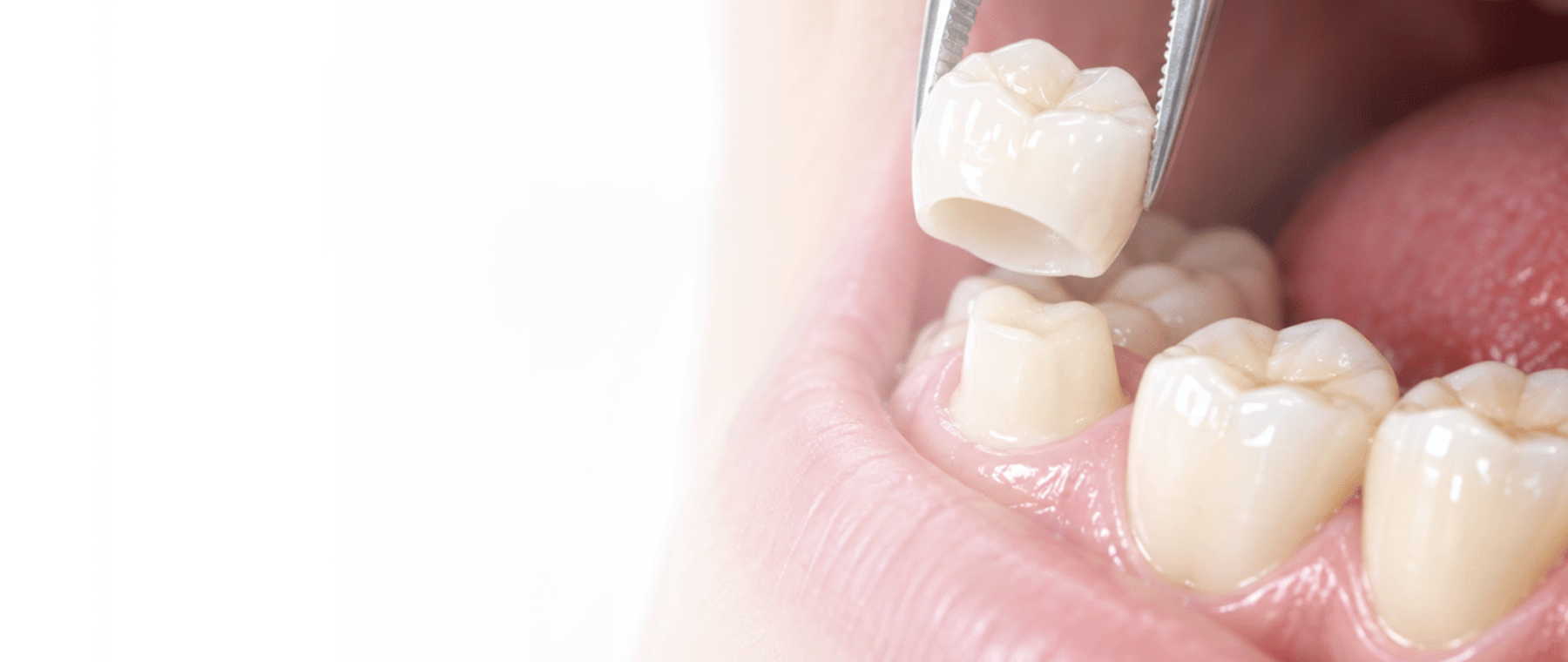
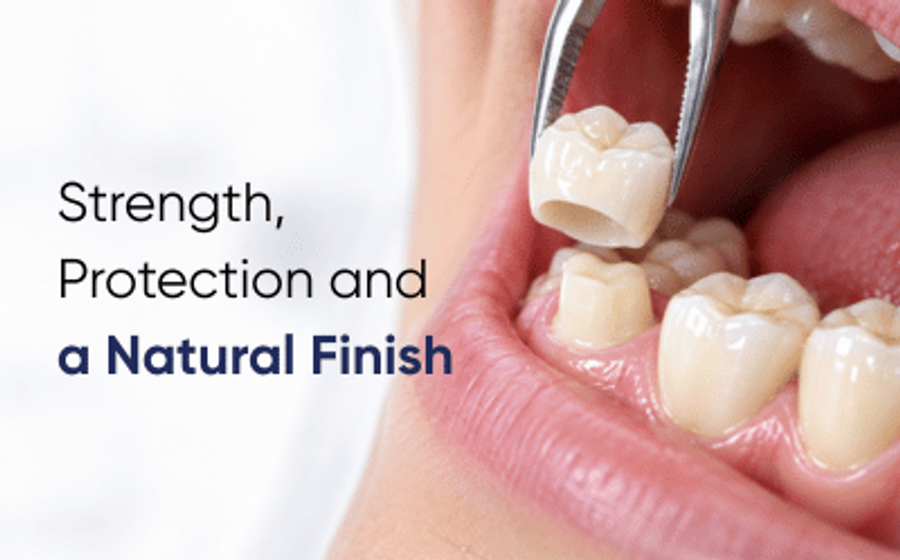
A dental crown is a custom-made cap that covers the entire visible part of a tooth. It is made in a dental laboratory from porcelain, zirconia, or metal-ceramic, then cemented onto the prepared tooth. A crown restores strength, shape, and appearance, and it protects a weakened tooth from splitting further under chewing forces.
You can read more about the treatment on our dental crown and bridge page.
When is a crown the right treatment?
Your dentist may recommend a crown if you have:
- A cracked or fractured tooth that still has a healthy root
- A large old filling that keeps chipping, leaking, or coming loose
- A back tooth that has had root canal treatment and needs protection
- A tooth worn down heavily by grinding
- A badly decayed tooth where not enough structure is left for a filling
- A discolored or misshapen tooth where reshaping alone will not help
- A dental implant or bridge that needs a crown as its final restoration
When a filling may be enough
Being honest about this matters, and the evidence supports it. The amount of healthy tooth left is the single most important factor. A 2025 systematic review in Cureus concluded that preserving coronal tooth structure is the most decisive factor in how long a restored root-treated tooth lasts, and that teeth with only one to three surfaces lost can often be restored with composite without compromising survival (Cureus, 2025).
So a crown is usually not needed when:
- The damage is a small chip or a cavity with plenty of sound tooth around it
- A front tooth has had root canal treatment through a small access cavity and is otherwise intact
- A composite filling or onlay can restore the tooth without covering all the cusps
A crown is usually the better option when a back tooth has lost much of its structure. A 2024 review reported that root-treated teeth restored with crowns had about 81% survival at 10 years, compared with about 63% for those restored without crown coverage, and that teeth crowned within four months of root canal treatment did better than those left longer (Cureus, 2024). If you have had a root canal on a molar, it is worth not delaying the crown. Our guide on what root canal treatment involves explains that stage of treatment.
Types of dental crowns in Lahore
Your dentist will match the material to the tooth, your bite, and your budget:
- Zirconia crowns: very strong and tooth-colored, suited to molars and to patients who grind. Modern monolithic zirconia resists chipping well.
- Lithium disilicate (E-max) crowns: excellent appearance with good strength, often chosen for front teeth and premolars.
- Metal-ceramic (PFM) crowns: a metal core under porcelain. Strong and long established, though a thin dark line can sometimes show at the gum over time.
- Full metal crowns: very durable and kind to the opposing teeth, usually used on back teeth where appearance matters less.
- Temporary crowns: acrylic or composite caps worn while the laboratory makes the final crown.
Published research on modern ceramic crowns reports five-year survival in the region of 95% or higher for both zirconia and lithium disilicate when they are well made and well cared for. Your dentist will explain the trade-offs for your particular tooth.
Who is a good candidate for a dental crown?
A crown is often suitable if you:
- Have a damaged tooth with a healthy root and enough structure to support a crown
- Have healthy gums and no untreated decay elsewhere
- Can keep the margins clean with brushing and daily cleaning between the teeth
A crown may not be the right answer if:
- The tooth is cracked vertically into the root, which usually cannot be saved
- Very little tooth structure remains above the gum, where a post or a different plan may be needed
- There is active gum disease or infection, which should be treated first
- The tooth needs root canal treatment that has not yet been done, since this is usually completed before crowning
- Heavy grinding is untreated, in which case a night guard should be part of the plan
Where a tooth cannot be saved, your dentist will discuss replacement options. Our article on root canal treatment vs extraction covers how that decision is usually made.
How crown treatment works at DentoCorrect
Most crowns take two visits, usually one to two weeks apart:
- Examination and planning: your dentist checks the tooth, your gums, and your bite, and takes an X-ray to assess the root and the amount of remaining structure.
- Preparation: under local anesthesia, decay and any failing filling are removed, the tooth is built up if needed, and it is shaped to receive the crown.
- Impression or scan: a mold or digital scan records the tooth so the laboratory can make an accurate crown, and the shade is matched to your neighboring teeth.
- Temporary crown: a temporary cap protects the tooth while you wait.
- Fitting: the final crown is tried in, checked for fit, shade, and bite, then cemented in place.
- Review: your dentist checks comfort, your bite, and the gum around the crown at a follow-up visit.
Mild sensitivity to cold or pressure for a few days after each visit is common. Tell your dentist if the tooth feels high when you bite, since a small bite adjustment usually settles it quickly.
Caring for your crown
- Brush twice daily and clean between the teeth, paying attention to the crown margin at the gumline
- Avoid biting very hard foods and objects such as nuts, ice, bones, and pens
- Wear a night guard if you grind your teeth
- Do not use your teeth to open packaging
- Keep up regular checkups so the crown, gum, and underlying tooth can be monitored
The crown itself cannot decay, but the natural tooth underneath it can. That is why cleaning around the edge and attending checkups matters.
Dental crowns in Lahore at our three branches
You can have crown treatment at any of our Lahore clinics:
- Johar Town: 7N, Main Boulevard, Phase 2, Johar Town, convenient for patients from Wapda Town, Bahria Town, Lake City, Township, and Model Town
- Gulberg: Gulberg 2, Lahore, central and easy to reach from Main Boulevard, Garden Town, and Liberty
- DHA Phase 4: DHA Phase 4, Lahore, convenient for DHA, Cantt, and nearby phases
Patients in Lahore often choose DentoCorrect because:
- Treatment is carried out by PMDC-registered dentists
- We follow ISO-certified clinical protocols for hygiene and sterilization
- We advise a filling when a filling is enough, and a crown when the tooth genuinely needs full coverage
- Shade, fit, and bite are checked carefully before the crown is cemented
- Costs and visit numbers are explained clearly before treatment begins
For directions and contact details, visit our Lahore clinic page.
Dental crown cost in Lahore
The cost of a crown depends on:
- The material, such as zirconia, E-max, metal-ceramic, or full metal
- Whether the tooth first needs root canal treatment, a build-up, or a post
- Which tooth is being crowned and how much preparation is needed
- Whether a temporary crown is required
For context, published prices in Lahore in 2026 commonly range from about PKR 25,000 to PKR 50,000 per crown, with metal-ceramic at the lower end and zirconia or E-max at the higher end. When comparing quotes, ask whether the temporary crown, build-up, and follow-up visits are included.
The most accurate way to know your cost is a consultation, where your dentist can examine the tooth, take an X-ray, and recommend the right material.
Frequently Asked Questions
How long do dental crowns last?
With good care, a well-made crown often lasts many years, and studies of modern ceramic crowns report survival of around 95% or more at five years. Longevity depends on the health of the tooth underneath, your bite, grinding habits, and how well you clean around the crown margin.
Do I always need a crown after a root canal?
Not always. Back teeth that have lost a lot of structure usually need a crown, and evidence suggests crowning them sooner rather than later gives better long-term results. A front tooth treated through a small access cavity may only need a filling. Your dentist will decide based on how much sound tooth remains.
Does getting a crown hurt?
Tooth preparation is done under local anesthesia, so most patients feel pressure rather than pain. Some sensitivity to cold and pressure for a few days after each visit is normal. If the tooth feels high when you bite or the discomfort increases, contact your dentist, as it usually needs a small bite adjustment.
How many visits does a crown take?
Most crowns need two visits, usually one to two weeks apart: one to prepare the tooth and take the impression or scan, and one to fit the final crown. If the tooth needs root canal treatment or a build-up first, more visits are needed before the crown stage begins.
Which crown material is best?
There is no single best material. Zirconia is very strong and suits molars and grinders. E-max gives an excellent appearance for front teeth. Metal-ceramic is a reliable, long-established option. Your dentist will recommend a material based on the tooth position, your bite, and how much space is available.
Can a crowned tooth still decay?
Yes. The crown cannot decay, but the natural tooth beneath it can, especially at the margin where the crown meets the gum. Brushing twice daily, cleaning between the teeth, and regular checkups are the best ways to prevent decay and keep the crown in place.
Is a crown better than a large filling?
It depends on how much healthy tooth is left. Where only one to three surfaces are affected, a well-placed composite filling often performs as well as a crown. Where most of the tooth is missing or the cusps are weakened, full coverage protects it better and reduces the risk of fracture.
Book a dental crown consultation in Lahore
If a tooth has cracked, a large filling keeps failing, or a root-treated molar still needs protecting, an early check can save the tooth. Visit our Johar Town, Gulberg, or DHA Phase 4 clinic to find out whether dental crowns in Lahore are right for you. Call +92 314 248 4555 or book online at DentoCorrect book appointment page.