Dental Implants in Peshawar: Smile Confidently After Tooth Loss
Losing a tooth changes more than a photograph. People start chewing on one side, avoid certain foods in company, and cover their mouth when they laugh without realizing they are doing it. Dental implants in Peshawar replace the root as well as the crown, which is what makes a fixed tooth feel like your own again rather than something that has to be taken out at night. Implants are not suitable for everyone, and the honest assessment of your bone, gums, and habits comes before any treatment plan.
What a dental implant actually is
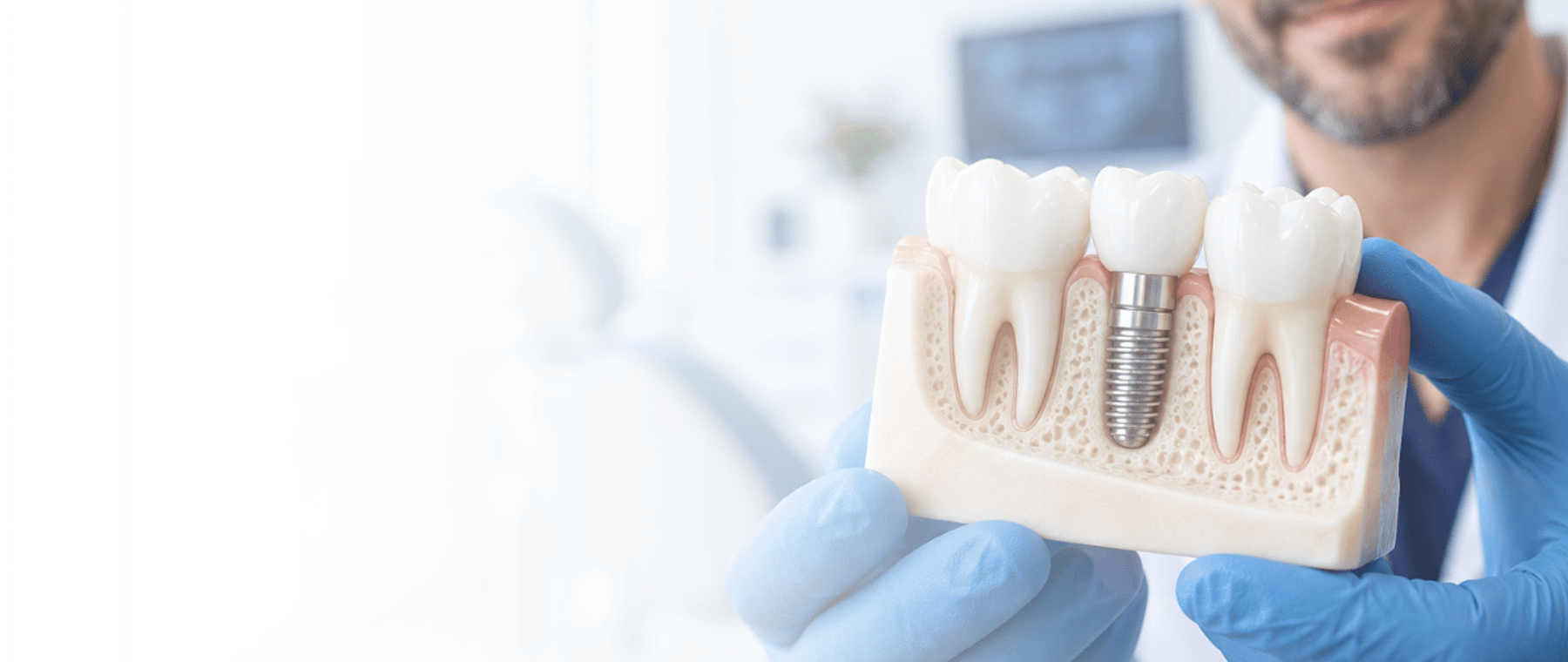
A dental implant is a small titanium post placed into the jawbone to take the place of a missing tooth root. Over a few months the bone grows against it, and once stable, an abutment and a crown are fitted on top. The result is a replacement tooth that stands on its own without support from neighboring teeth.
Why replacing a missing tooth matters
- The opposing tooth can over-erupt into the empty space over time
- Neighboring teeth drift and tilt, opening gaps that trap food
- Jawbone in the gap shrinks steadily once the root is gone
- Chewing shifts to one side, loading the jaw joint unevenly
- Speech can be affected when front teeth are missing
- A bridge requires cutting down healthy teeth either side; an implant does not
How long do implants last?
Long-term data is encouraging. A prospective analysis of 453 implants followed over a decade reported a cumulative survival rate of 96.1% at 10 years in healthy patients, falling to 83.8% at 25 years (Journal of Clinical Medicine, 2020).
That is the figure for people whose general and oral health is reasonable. It is not a promise, and the same research identifies what changes the odds.
Smoking and naswar: the honest conversation
This matters more in Peshawar than almost anywhere, and it deserves plain speaking rather than a footnote. The same 10-year analysis found the hazard of losing an implant in the upper jaw was 5.64 times higher in smokers than non-smokers. Separate reviews report smokers carry roughly 2.6 times the risk of peri-implantitis, the gum and bone infection around an implant that is the main cause of late failure.
- Tobacco reduces blood supply to the gums, slowing healing after surgery
- Smokers lose more bone around implants, particularly in the upper jaw
- Smokeless tobacco held in the cheek keeps the tissue in direct contact with irritants
- Risk falls when use stops, and the weeks around surgery matter most
Being a smoker does not automatically rule out implants. It does mean your dentist should discuss the raised risk openly, and that cutting down or stopping around the time of surgery measurably improves your chances.
Who is a good candidate
Implants tend to suit you if:
- You have enough healthy jawbone, or are willing to have a graft to build it
- Your gums are healthy and any gum disease has been treated
- Your general health is reasonably stable
- You maintain good daily cleaning and attend regular checkups
- You understand the treatment takes months rather than weeks
Your dentist may advise a different option when:
- Bone height or width is inadequate and grafting is not practical for you
- Gum disease is active and untreated
- Diabetes is poorly controlled, which impairs healing
- You are having, or have had, certain bone medications or head and neck radiotherapy
- Jaw growth is not yet complete, which usually means waiting in younger patients
Our guide to bone grafting explains what is involved when there is not enough bone to start with.
How implant treatment works at DentoCorrect
- Assessment: examination of the gap, the surrounding teeth and gums, plus X-rays or a 3D scan to measure the bone available.
- Planning: your dentist confirms whether a graft is needed, how many implants, and the total time and cost.
- Preparation: any gum treatment, extraction, or bone graft is completed first and allowed to heal.
- Placement: the implant is placed under local anesthetic in a procedure most patients find easier than an extraction.
- Healing: the bone integrates with the implant over roughly three to six months, often with a temporary tooth in place meanwhile.
- Abutment and impression: once stable, the connector is fitted and records are taken for the crown.
- Crown fitting: the final crown is fitted, the bite checked, and cleaning around it demonstrated.
- Review: regular checks and hygiene appointments protect the result long term.
What recovery is actually like
- Expect some swelling and tenderness for two to three days, usually manageable with ordinary painkillers
- Keep to softer foods on that side for the first week
- Avoid smoking, which slows healing more than anything else at this stage
- Rinse gently with warm salt water after the first day, as advised
- Keep the area clean; do not avoid brushing nearby teeth
- Report increasing pain, spreading swelling, or a loose healing cap rather than waiting
Our post on relieving dental implant pain covers the first week in more detail.
Dental implants in Peshawar at our Ring Road clinic
Our Peshawar branch is at Shop No. 8B, Sami Tower, Hayatabad Toll Plaza, Ring Road, which makes it straightforward to reach from Hayatabad, University Town, Warsak Road, and the wider city.
Patients in Peshawar often choose DentoCorrect because:
- Treatment is carried out by PMDC-registered dentists
- We follow ISO-certified clinical protocols for hygiene and sterilization
- Bone is assessed with imaging before an implant is recommended, not after
- We discuss tobacco use frankly, because it genuinely changes the outcome
- The full cost, including the crown and any graft, is set out before treatment starts
For directions and contact details, visit our Peshawar clinic page.
Dental implant cost in Peshawar
The cost depends on:
- How many implants are being placed
- The implant system used, as established international brands cost more than budget alternatives
- The crown material, usually zirconia or porcelain fused to metal
- Whether a bone graft or sinus lift is needed first
- Any extraction or gum treatment required beforehand
- Imaging, including a 3D scan where indicated
For context, published prices across Pakistan in 2026 commonly run from about PKR 60,000 to PKR 150,000 for a single implant including abutment and crown, with premium systems quoted higher. Commentary in the market suggests Peshawar generally sits below the rates seen in Karachi, Lahore, or Islamabad. A graft, when needed, is quoted separately.
Ask for a written estimate covering the implant, the abutment, and the crown together. Quotes that name only the implant fee can look much cheaper than they turn out to be. Our post on dental implants in Karachi covers the same treatment for patients in the south, and our dental implants page sets out the options.
Frequently Asked Questions
How painful is having an implant placed?
Most patients report the placement itself as more comfortable than they expected, and often easier than the extraction that preceded it, since the area is fully numbed. Soreness for two to three days afterwards is normal and usually settles with ordinary painkillers. Tell your dentist if discomfort increases rather than eases.
How long does the whole process take?
Typically three to six months from placement to final crown, because the bone needs time to integrate with the implant. A bone graft adds several months before placement can even begin. Same-day options exist in selected cases, but they depend on bone quality and are not suitable for everyone.
Can I have an implant if I use naswar or smoke?
Often yes, but with a frankly higher risk of failure and of peri-implantitis, particularly in the upper jaw. Your dentist should quantify that risk for you rather than gloss over it. Reducing or stopping around the surgery and healing period makes a measurable difference to the outcome.
What if I do not have enough bone?
Bone grafting is common and usually successful, building up the ridge so an implant can be placed later. In the upper back jaw a sinus lift may be used. It adds time and cost, so it should appear in your written estimate from the outset rather than as a surprise midway.
Is a bridge a better option?
A bridge is quicker and cheaper initially, but it requires cutting down the healthy teeth on either side, and it does not stop bone loss in the gap. An implant preserves the neighboring teeth. Which suits you depends on your bone, the condition of those adjacent teeth, and your budget.
How do I look after an implant?
Brush twice daily and clean between the implant and its neighbors with interdental brushes or floss designed for implants. Attend regular hygiene appointments, since peri-implantitis develops quietly and is far easier to manage early. An implant cannot decay, but the gum and bone supporting it certainly can be lost.
Book an implant consultation in Peshawar
If you have been living with a gap and want to know whether an implant is realistic for you, an examination and a scan will show how much bone you have and what the treatment would involve. Call [+92 347 370 9783](tel:+923473709783) or book online at our book appointment page to visit our Ring Road clinic.