
Tooth decay (a cavity)
The most common cause. Decay eats through the enamel towards the nerve, first causing sensitivity to sweet and cold, then a lasting ache.
Tooth-coloured fillings
A toothache is pain in or around a tooth, most often caused by a cavity, an infected nerve, a cracked tooth, gum disease or a wisdom tooth coming through. A painkiller, a cold compress and warm salt-water rinses ease it for a while, but a toothache rarely goes away for good until a dentist treats the cause.
The kind of pain you feel is a clue to what is wrong with the tooth. These are the most common types:

The type of pain is a clue, not a diagnosis. An examination and an X-ray show which tooth is causing it and why.
Book a Free ConsultationAlmost every toothache comes from one of these six problems, and each has its own fix:
The most common cause. Decay eats through the enamel towards the nerve, first causing sensitivity to sweet and cold, then a lasting ache.
Tooth-coloured fillingsWhen decay or a crack reaches the nerve it becomes inflamed and can die, causing throbbing pain, swelling and sometimes a pus-filled abscess.
Root canal treatmentA crack lets bite pressure and cold reach the inside of the tooth, so it hurts sharply when you chew or let go.
Broken tooth guideA wisdom tooth with no room to erupt presses on the tooth in front and the gum over it can become infected, causing pain at the back of the jaw.
Wisdom tooth painPlaque and tartar below the gum line cause swollen, bleeding gums and a dull ache, and can loosen teeth over time.
Scaling and polishingWorn enamel or receding gums expose the inner layer of the tooth, causing short, sharp pain with cold, hot or sweet food.
Teeth sensitivity guideMany people find tooth pain is at its worst when they lie down to sleep. There are three reasons:
When you lie flat, more blood flows to your head. Inside an inflamed tooth there is no room to swell, so the extra pressure makes the nerve throb.
During the day work, talking and eating take your mind off the pain. In a quiet, dark room the same ache feels much stronger.
Many people grind or clench their teeth at night without knowing it, which puts extra load on a tooth that is already sore.
Pain that wakes you up usually means the nerve inside the tooth is inflamed. Take a painkiller before bed, sleep with your head raised, and book a dentist the next day.
Until you can see a dentist, these steps take the edge off the pain:

These ease the pain; they don't treat the tooth. Don't take antibiotics without a dentist's advice. For which painkillers work best, see our guide to tooth pain tablets in Pakistan.
Most toothaches can wait a day or two for an appointment. Some can't:
Go to a hospital emergency department straight away if swelling spreads towards your eye or down your neck, or you find it hard to swallow or breathe. Book an appointment.
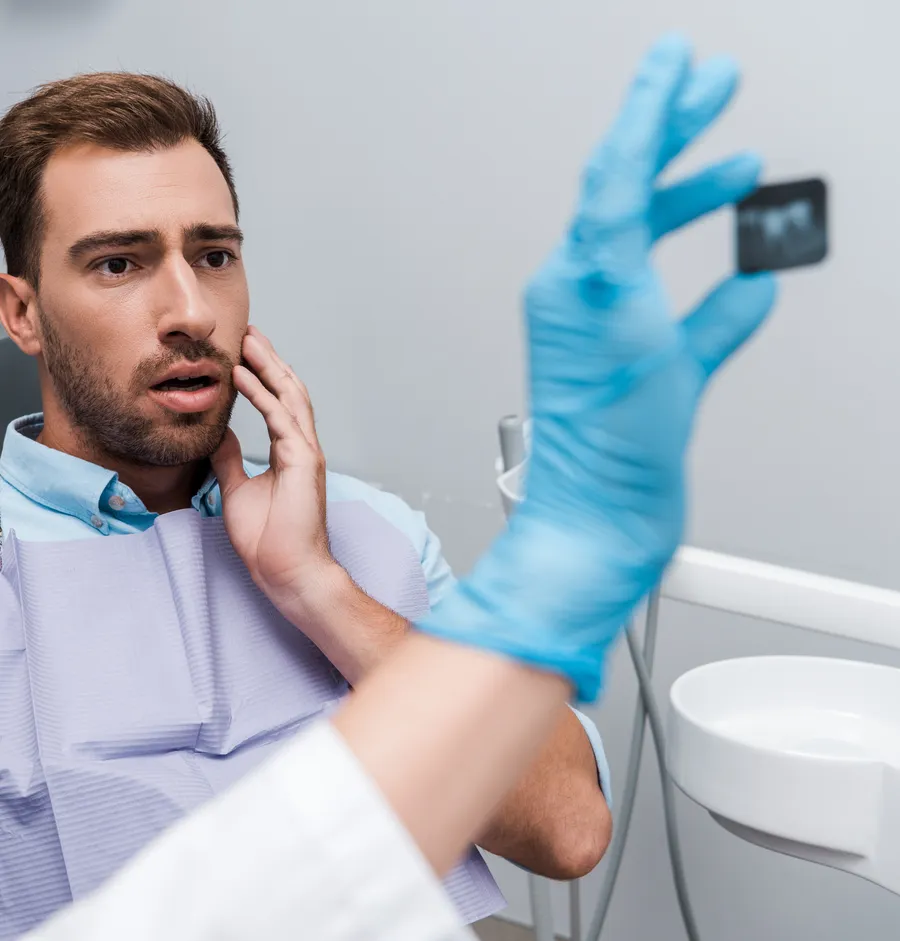
The dentist first finds the tooth and the cause with an examination and an X-ray, then treats it. These are the treatments we use for toothache at DentoCorrect:

Removing the decay and sealing the tooth with a tooth-coloured filling stops the pain from a cavity before it reaches the nerve.

When the nerve is inflamed or infected, it is cleaned out and sealed. This ends the pain and saves the tooth.

A tooth that is too badly damaged to save, or a wisdom tooth with no room, is removed gently under local anaesthetic.

A deep clean below the gum line treats the gum disease behind a dull, aching tooth and swollen, bleeding gums.
DentoCorrect is Pakistan's ISO-certified, multi-city dental clinic network with qualified dentists at every location. Here is what sets us apart:
Experienced dentists at every DentoCorrect clinic
An examination and X-ray, not just painkillers and antibiotics
Strict safety and sterilisation protocols at every clinic
Fillings and root canals first; extraction only when a tooth cannot be saved

You'll know what's needed and what it costs before we begin

Lahore (Johar Town, Gulberg & DHA), Islamabad, Rawalpindi, Karachi, Faisalabad, Peshawar, and Multan
It depends on the cause. Soreness from food stuck between teeth or sensitivity after a filling settles within days. Pain from a cavity or an inflamed nerve tends to come and go for weeks and gets worse over time, until the tooth is treated.
Sometimes the pain stops, but the problem usually hasn't. A nerve that is dying can go quiet for a while before an infection or abscess forms. If a tooth has hurt for more than a day or two, have it checked even if the pain has eased.
For most adults, ibuprofen works well because it also reduces inflammation; paracetamol is the alternative if you can't take ibuprofen. Follow the dose on the pack and don't take painkillers for more than a few days without seeing a dentist.
Not without a dentist's advice. Antibiotics don't fix a cavity or an inflamed nerve, so the pain comes back once the course ends. They are only useful when an infection is spreading, with swelling or fever, and even then the tooth itself still needs treatment.
Yes. The nerves of the upper and lower back teeth share pathways with the ear, jaw and temple, so pain from one tooth is often felt there. An earache with no ear problem, on the same side as a sore tooth, is a common sign of a dental cause.
Yes. The roots of the upper back teeth sit just under the sinuses, so a blocked or infected sinus can make several upper teeth ache at once, especially when you bend forward. If the pain is in one tooth only, or in the lower teeth, a dental cause is more likely.
Paracetamol is usually considered the safer choice in pregnancy; ibuprofen is generally avoided, particularly in the third trimester. Check with your doctor before taking any medicine, and see a dentist, as treating the tooth is safe in pregnancy and better than leaving an infection.
Rinse their mouth with warm water, check for food stuck between the teeth, and give a children's paracetamol or ibuprofen syrup at the dose for their age. Book a dental visit soon, and go the same day if their face is swollen or they have a fever.
Some sensitivity to cold for a few days after a filling is normal. Pain when you bite usually means the filling is slightly high and needs a quick adjustment. Throbbing pain that keeps you awake can mean the nerve is inflamed and should be checked.
Toothache is called dant dard (دانت درد) in Urdu, and its treatment is often searched as dant dard ka ilaj. Dentists may call it odontalgia.