
Tea and coffee
Strong chai several times a day is one of the commonest causes in Pakistan. Coffee, cola and dark sauces stain in the same way.
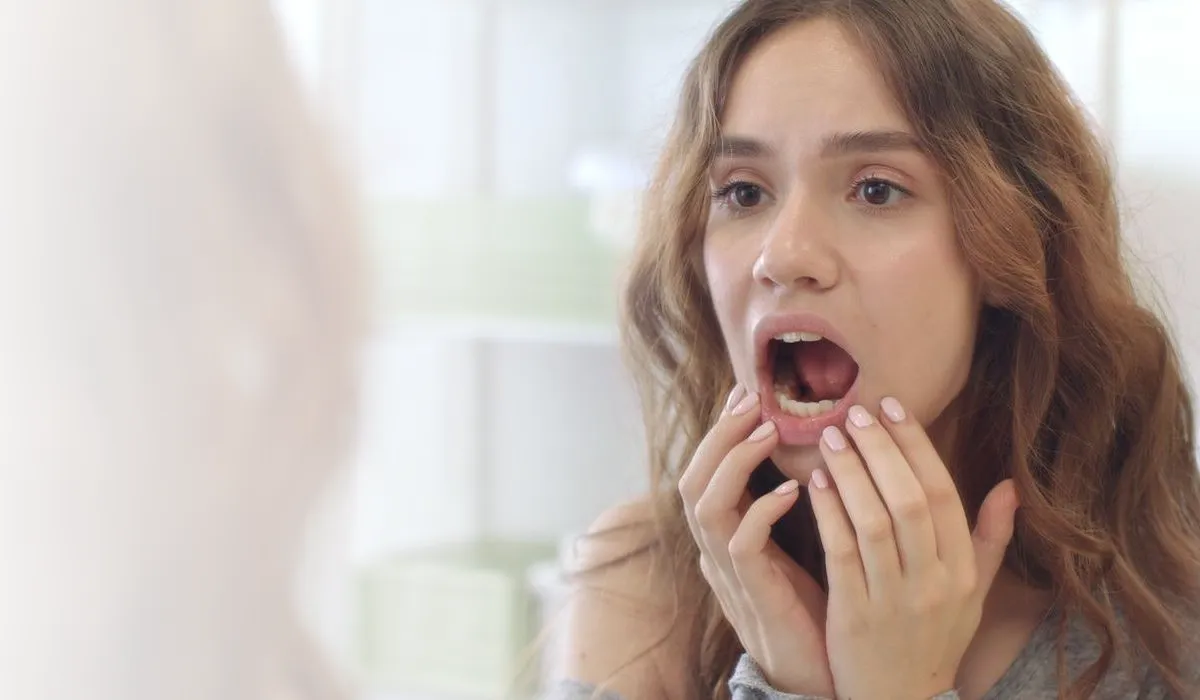
Teeth turn yellow from stains on the enamel, such as tea, coffee and tobacco, from tartar build-up, or because thinning enamel lets the yellow layer underneath show through. Surface stains come off with a professional scale and polish, deeper yellowing lightens with dentist-supervised whitening, and worn teeth can be covered with bonding or veneers.
The colour and where it sits tell you a lot about the cause, and how easily it can be fixed:
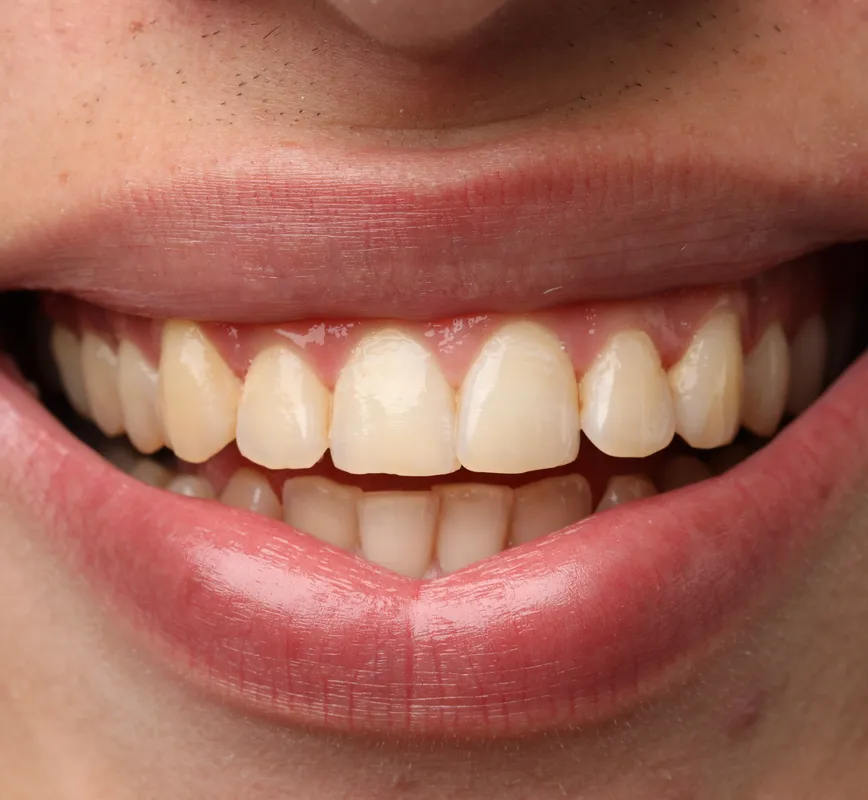
Healthy teeth are naturally ivory rather than pure white. A shade check at the dentist tells you how much lighter yours can safely go.
Book a Free ConsultationSome causes sit on the surface and some come from inside the tooth. These are the six most common:
Strong chai several times a day is one of the commonest causes in Pakistan. Coffee, cola and dark sauces stain in the same way.
Tobacco and areca nut leave stubborn yellow-brown stains, and also cause gum disease and bad breath.
Plaque that isn’t brushed away hardens into yellow tartar, mostly along the gum line and behind the lower front teeth.
Enamel wears thinner over the years, especially with hard brushing or acidic drinks, letting the yellow dentine underneath show through.
Some people simply have thinner or more translucent enamel, or naturally darker dentine, so their teeth look yellower from the start.
Some antibiotics taken in childhood, and high-fluoride water while the teeth were forming, can discolour teeth from the inside.
Brushing keeps new stain off, but it can't remove these three, each of which has its own fix:
Once plaque hardens into tartar, no toothbrush will shift it. It needs a professional clean, after which teeth often look a shade or two lighter.
Scaling and polishingYears of tea and tobacco push stain into the enamel itself. Brushing cleans the surface, but only whitening gel reaches inside.
Teeth whiteningBrushing too hard actually makes this worse by wearing enamel away. Tooth-coloured bonding can cover the worn areas.
Composite bondingHome care removes new surface stain and stops teeth getting yellower. These habits make the biggest difference:
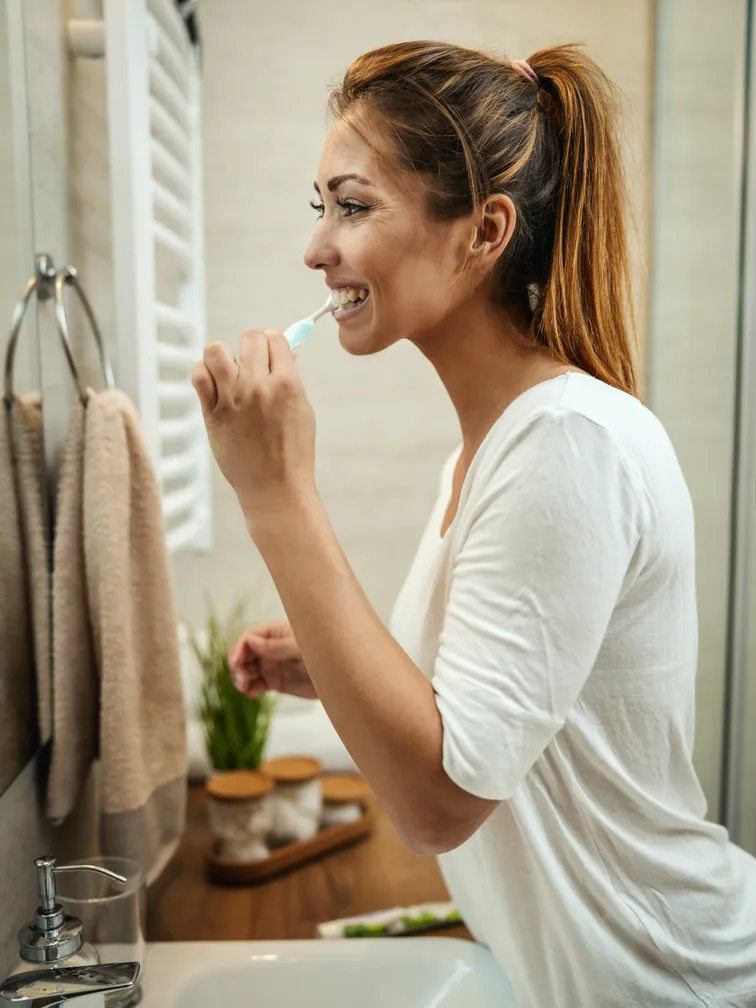
Home care can't change the colour inside the tooth. For a visibly whiter smile, ask about professional teeth whitening.
Some are harmless, but several popular remedies damage enamel and leave teeth looking more yellow, not less:
Acids and abrasives strip enamel, and lost enamel doesn't grow back. A dentist can tell you which option suits your teeth. Book a shade check.
The best treatment depends on why your teeth are yellow. After a shade check, these are the treatments we use at DentoCorrect:
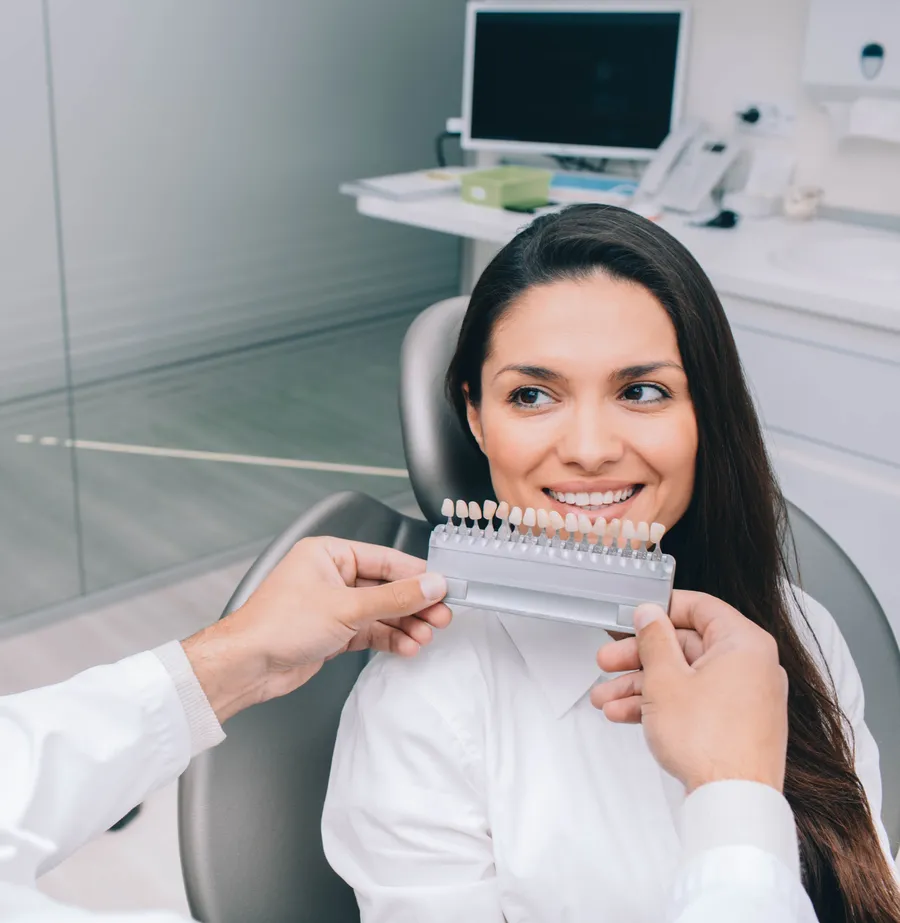

Removes tartar and surface stains from tea and tobacco. Often the first step, and sometimes all that is needed.

A professional whitening gel lightens deep yellow stain inside the enamel by several shades, safely and evenly.

Tooth-coloured resin covers worn, thin or patchy areas that whitening can’t fix, in a single visit.

For a dark, dead or badly stained tooth, a crown or veneer gives a natural, lasting colour that matches the rest.
DentoCorrect is Pakistan's ISO-certified, multi-city dental clinic network with qualified dentists at every location. Here is what sets us apart:
Experienced dentists at every DentoCorrect clinic
Surface stain, tartar or thin enamel, so you get the right fix
Strict safety and sterilisation protocols at every clinic
Gum protection and a shade check before and after

You'll know what's needed and what it costs before we begin

Lahore (Johar Town, Gulberg & DHA), Islamabad, Rawalpindi, Karachi, Faisalabad, Peshawar, and Multan
Usually, yes. Surface stains from tea and tobacco come off with a professional scale and polish, and deeper yellowing inside the enamel can be lightened several shades with dentist-supervised whitening. Teeth that are yellow because the enamel is thin may need bonding or veneers instead.
Yes. Natural teeth are not pure white. The inner layer, dentine, is yellowish and shows through the enamel, so a light ivory or yellow shade is normal and healthy. Teeth also get slightly darker with age.
Yes. Tea, especially strong chai drunk several times a day, is one of the commonest causes of yellow and brown stains. Rinsing your mouth with water after a cup and having a scale and polish twice a year keeps the staining under control.
Not safely. Lemon and other acids dissolve enamel, which makes teeth look more yellow over time. Charcoal powder and gritty pastes scratch the surface. Baking soda is mildly abrasive and can lift some surface stain if used occasionally, but it can't change the colour of the tooth itself.
Yes, when it is done or supervised by a dentist. The gel lightens the tooth without damaging the enamel. Some people have short-lived sensitivity for a day or two. Strong kits bought online without a check-up can burn the gums and should be avoided.
Usually one to three years. It lasts longer if you cut down on tea, coffee and tobacco, rinse after dark drinks and keep up regular cleaning. A short top-up treatment brings the shade back when it starts to fade.
Sometimes. Yellowing can mean the enamel is wearing thin, a single darker tooth can mean its nerve has died, and brown or black spots can be decay. If the colour has changed suddenly or only one tooth is affected, have it checked.
New adult teeth often look more yellow than the baby teeth beside them, which is normal. Yellow or brown patches can also come from plaque, so help your child brush twice a day. Whitening isn't suitable for children; ask a dentist if you are worried.
No. Whitening only lightens natural teeth. Tooth-coloured fillings, crowns and veneers keep their colour, so if they are on your front teeth they may need replacing after whitening to match your new shade.
In Urdu, yellow teeth are usually described as danton ka peela pan (دانتوں کا پیلا پن). Dentists call it tooth discolouration.