Clear Aligners in Peshawar: A Braces Alternative for Working Adults
Most adults who ask about clear aligners in Peshawar have already half-decided against braces. What they have not decided is whether they trust themselves with removable trays. The question reaches our Hayatabad clinic in different words ("I am in meetings all day", "I drive to Swat every second week", "I take chai six times before lunch") but it is the same question underneath: can I keep these in for 22 hours a day with my schedule? The short answer is yes for most people with a desk and fixed meal times, no for a specific few, and the difference is not willpower. It is routine. This article weighs aligners against fixed braces on the things that matter in a Peshawar working week, and ends with the cases where braces are the better buy.
Will you manage 22 hours a day on a working week?
Yes, if your day has set times for eating. Trays come out for food and for any drink other than plain water, then go back in after a rinse. For someone who eats breakfast at home, lunch at a table and dinner with family, that is usually under two hours out of 24. People who graze all day, or who host guests with chai arriving every half hour, are the ones who struggle.
We say this at the first visit because the numbers are not flattering. A 2025 systematic review in Cureus found that only around 36% of aligner patients fully met the 22-hour target, roughly a quarter wore their trays poorly, and inadequate wear time was a major cause of results falling short of the plan (AlBaqshi et al., Cureus, 2025). An orthodontist who plans your case as if you are perfect is setting you up to pay for refinement trays later.
What actually breaks wear time in our patients, in rough order:
- The tray wrapped in a tissue at a restaurant table and left there.
- "I will put them back after this one cup." Then the next cup.
- Guests who arrive at nine and leave at midnight, with dinner at eleven.
- Ramadan evenings. Fasting hours are easy, because nothing goes in the mouth; iftar to sehri is where the hours leak.
A simple test. Count your eating and drinking occasions tomorrow, chai included. Four or fewer, and you are a tray patient. Eight or more, and either the habit changes before the trays arrive or braces are the safer spend. Nobody fails at aligners because of their job title. They fail because of the seventh cup.
Aligners and braces through a Peshawar work day
Take an ordinary Tuesday.
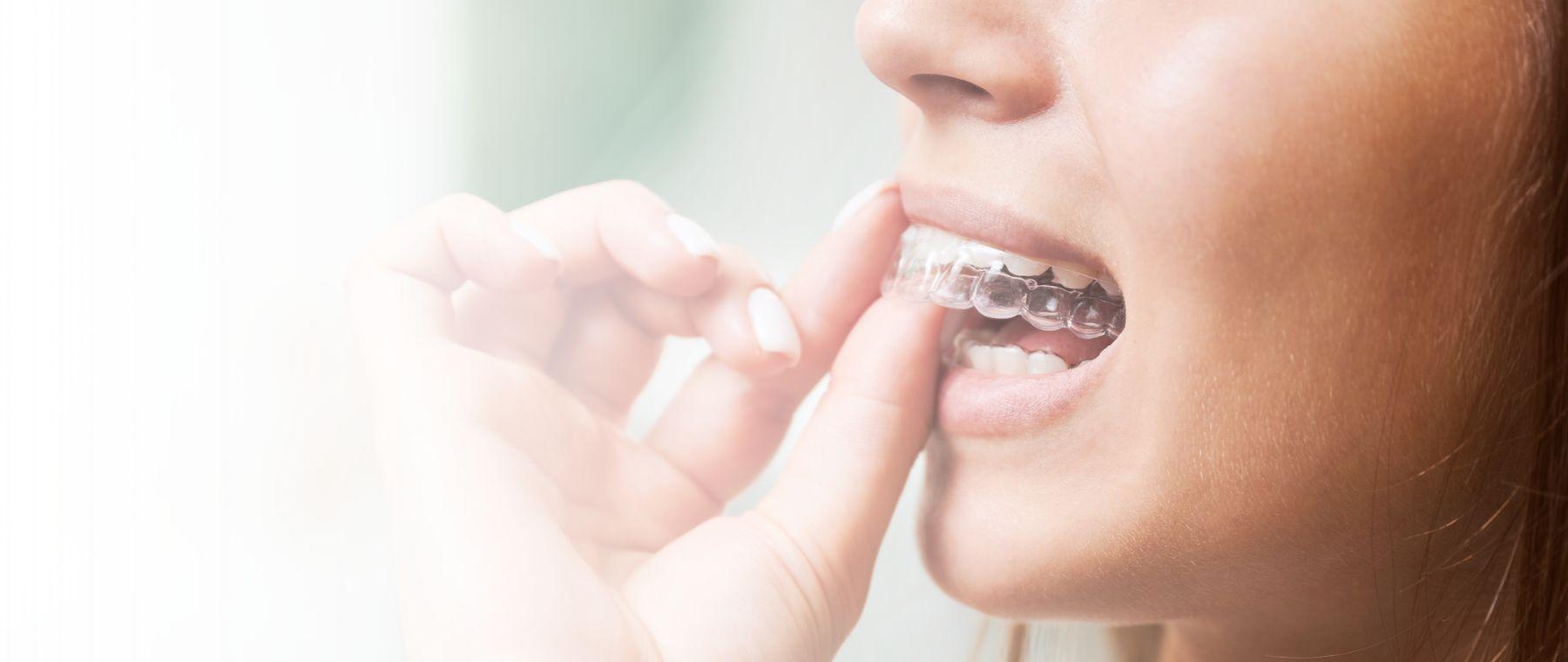
A 9 AM meeting. Clear aligners are hard to see across a table and nearly impossible on a video call. What people sometimes notice up close are the attachments, small tooth-colored bumps bonded to a few teeth so the tray can grip them. Ceramic braces are the second most discreet option: tooth-colored brackets, but still a wire at speaking distance. Metal braces are visible from across the room, and for many adults in client-facing work that settles the matter on its own.
Mid-morning chai. With braces you simply drink it. With aligners you have a decision: take the trays out (case, rinse, back in afterwards), or drink with them in and accept two problems. Hot doodh patti can warp the plastic, and milky sweet tea pools between tray and tooth, which is how aligner patients get cavities on teeth that were healthy before. We tell patients to pick two chai slots a day and protect them, rather than sipping through eight.
Lunch out. Chapli kabab, naan, a karahi shared across the table. Braces mean working around the hard and sticky things and a mirror check before the afternoon. Aligners mean eating whatever you like, then finding a basin to rinse your mouth and clean the trays before they go back in. In an office that is easy. On a site, or in a car between two sites, it is the single most awkward part of the day, and worth being honest about before you choose.
The first week: speech, soreness and the tray left on a plate
Speech is the objection people are embarrassed to raise, so here it is plainly. New trays sit against the palate and the back of the front teeth, and most people lisp slightly on "s" and "sh" for the first two to five days. Reading aloud for ten minutes on the first evening speeds it up considerably. By the end of the week colleagues generally cannot tell, and patients who present for a living often start on a Thursday so the worst passes over the weekend.
Soreness runs differently. Each new aligner tray brings two or three days of tightness and tender front teeth; biting into an apple is the test most people fail on day one. Change trays at night, just before sleep, and the worst of the pressure happens while you are asleep. Braces are sore for two or three days after each adjustment visit instead, and the brackets rub the cheeks until the skin toughens, which is what the wax is for.
Then the tray on the plate. It is the most common way a tray is lost, nearly always at lunch out. Keep the case in the same pocket as your phone. If a tray does go missing, call us the same day rather than going without for a week; teeth drift back surprisingly quickly in the first months.
Appointments when you work out of Mardan, Swat or Kohat
This is where the two options separate for anyone whose work is not in Peshawar every day.
Fixed braces need an adjustment roughly every four to six weeks for the whole course, each one twenty to thirty minutes in the chair, and a broken bracket or a poking wire adds an unplanned trip. Over eighteen months that is typically fifteen or more visits, none of them optional.
Clear aligners are handed over in batches of several trays, and you change them yourself at home on the schedule in your plan. Reviews are usually every six to ten weeks, and between reviews a photo on WhatsApp is often enough for the orthodontist to confirm the trays are tracking. For someone posted in Swat, teaching in Mardan or driving the Kohat road twice a month, that is somewhere around ten fewer trips over the course of treatment.
Two honest caveats. Near the end, most cases need a refinement scan and a short extra series of trays, which means a visit at a specific time. And an attachment that pops off while you are away needs re-bonding at the clinic, so we ask patients who travel to check their attachments with a fingernail before leaving the city.
How much do clear aligners in Peshawar cost?
Clear aligners at DentoCorrect start from PKR 150,000 for a straightforward case, with monthly installment plans, and the first consultation is free. Across Peshawar, quoted prices run from roughly PKR 150,000 to PKR 700,000 according to the Marham directory listing for the city, and the spread comes down to how many trays the case needs and who is planning it.
What the quote should include: the digital records and planning, every tray in the series, refinement trays if the first series does not finish the job, all review visits, and the retainers at the end. The cheap end of the Peshawar range usually leaves out one of those, most often the retainers or the refinements, so a PKR 150,000 quote and a PKR 220,000 quote can describe the same treatment once you add the missing lines back in.
Against braces, the picture is less one-sided than people expect. At DentoCorrect, metal braces start from PKR 220,000, ceramic from PKR 250,000 and self-ligating from PKR 350,000, so a simple aligner case can cost less than metal braces, while a long and complex aligner case will cost more. The full braces breakdown is in our guide to braces prices in Pakistan, and the treatment page for clear aligners sets out the installment plan. We put both options in writing, side by side, before anyone commits.
Not sure whether yours is a simple case or a braces case? Send a photo of your front teeth, smiling, with your age and a line about your work routine on WhatsApp and the team will tell you which way it usually goes.
When braces win, even for a working adult
A clinic that fits clear aligners to everyone who asks is not doing orthodontics. Aligners are excellent at tipping and rotating front teeth and closing small gaps. They are weaker at moving teeth a long way bodily, at pulling teeth down or up, and at gripping round teeth. Fixed braces remain the better tool when the case includes:
- Crowding severe enough to need extractions, with the back teeth then moved forward to close the space.
- A canine or premolar rotated well past a quarter turn. Round teeth give the plastic little to hold.
- A deep bite or an open bite, where the vertical position of the teeth has to change, not just the alignment.
- A high or impacted canine that needs to be brought down into the arch.
- The patient who, having read the first section honestly, knows the trays will spend their evenings in a pocket. Braces work while you forget about them.
There are also people we send away without a quote for either. Gums that bleed on probing need a course of cleaning first, because moving teeth through inflamed bone is a way to lose bone; our Peshawar guide to scaling and polishing covers that visit. Active decay gets filled first. And a single slightly turned front tooth sometimes needs a short tray series or minor bonding rather than full treatment; the trade-offs are in our piece on veneers for crooked front teeth in Peshawar. We would rather lose the aligner case than start one that will not track.
Clear aligners in Peshawar at our Hayatabad Toll Plaza clinic
The DentoCorrect Peshawar clinic is at Shop No. 8, Sami Tower, Hayatabad Toll Plaza, Ring Road. Most of our aligner patients come from the Hayatabad phases, University Town and the Karkhano side, with a steady number driving in from Charsadda, Mardan, Nowshera and the Kohat road, because the review schedule makes clear aligners in Peshawar workable from out of town. Sitting on Ring Road by the toll plaza, the clinic is reachable from the motorway side without crossing University Road traffic. Hours are 10:30 AM to 9:00 PM, Monday to Saturday, closed Sunday; the slots after 6 PM fill first, so book those a week ahead. Call the branch on +92 347 3709783 or see the Peshawar clinic page for directions.
Before you decide: what Peshawar patients ask us about aligners
How long do teeth aligners take to work?
Front teeth often look noticeably straighter within three to four months. A full course for a mild case typically runs six to twelve months, a moderate case twelve to eighteen, followed by retainers. Missed wear hours stretch all of these; a tray worn fourteen hours a day instead of twenty-two is a tray that may need repeating.
Can I eat with teeth aligners on?
No. Chewing cracks the plastic and traps food against the teeth. Take them out for anything other than plain water, rinse, and put them back as soon as you have finished. The trays live in their case while you eat, never in a napkin.
Who is not suitable for teeth aligners?
Anyone with untreated gum disease or active decay, until those are sorted. Cases that need extractions, large rotations or vertical bite changes usually do better in braces. And anyone who cannot realistically keep the trays in for around 22 hours a day, which is a routine question, not a character one.
Do I need retainers after braces or aligners?
Yes, after both. Teeth drift back without them, fastest in the first year. Most adults wear a removable retainer every night for at least a year and then several nights a week long term; a thin fixed wire behind the lower front teeth is often added. Retainers should be in the quote from the start.
The next step from Hayatabad
If you have read this far and counted your chai, you already know which way you lean. The consultation for clear aligners in Peshawar is free, evening slots run until 9 PM Monday to Saturday, and the records taken at that visit are what start the planning clock. Call +92 347 3709783, message us on WhatsApp with a day and time that suits your week, or book an appointment online. Bring your work calendar. It is the most useful thing you can put on the table.