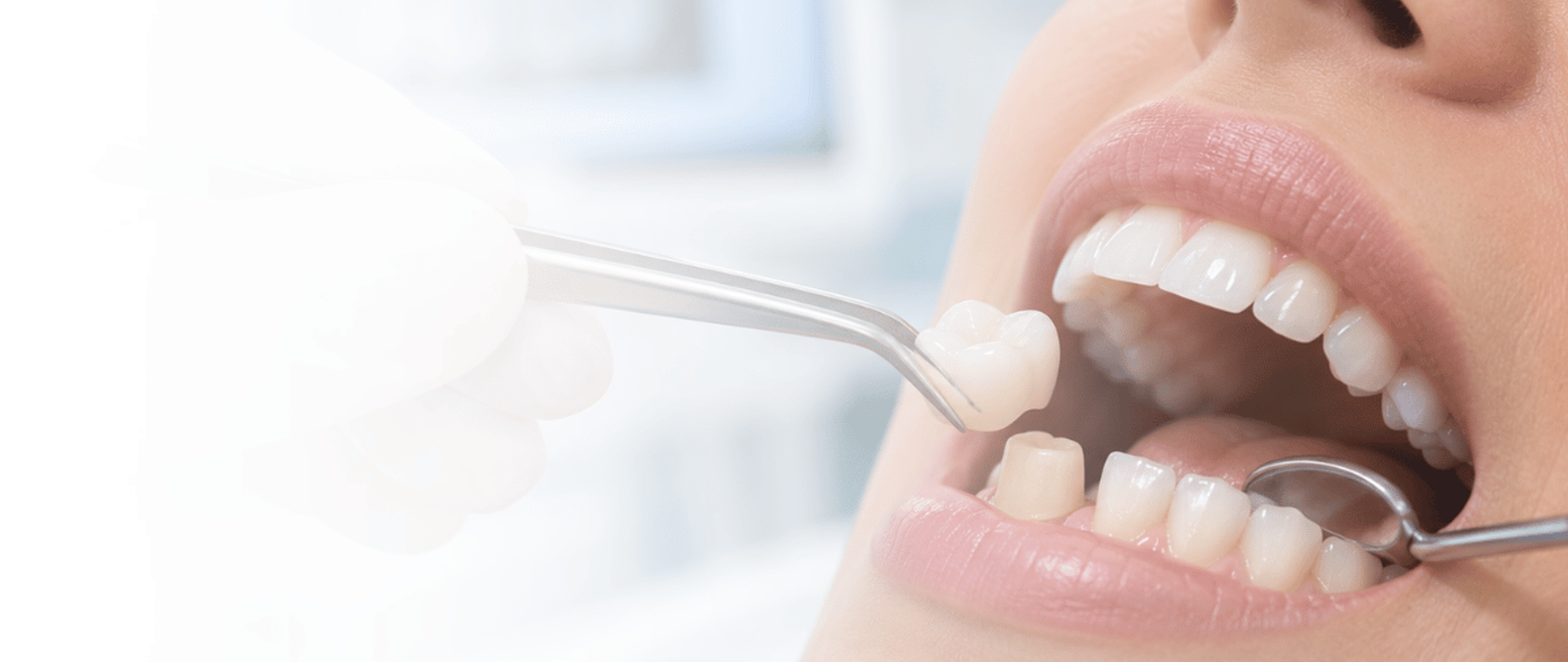

Dental Crowns in Multan: Cover a Discolored, Darkened Tooth
One tooth that has gone grey or brown among a row of normal ones is hard to ignore, and it is usually a front tooth, which makes it harder still. Patients often arrive having already decided they want it capped. Dental crowns in Multan can certainly cover a darkened tooth and give a predictable result, but a crown is not always the first thing your dentist should reach for. Knowing why the tooth changed color decides which treatment is right, and the least destructive option that works is almost always the better one.
What a dental crown is
A dental crown is a custom-made cap that covers the entire visible part of a tooth. It is made in a laboratory from porcelain, zirconia, or metal-ceramic and cemented over the prepared tooth. A crown restores shape, strength, and appearance at once, which is why it suits a tooth that is both discolored and structurally weak.
You can read more on our dental crown and bridge page.
Why one tooth turns dark
The cause matters more than the color, because it determines the treatment:
- A dead or root-treated nerve. Blood breakdown products soak into the dentine after trauma or infection, turning the tooth grey or brown from the inside. This is the most common reason a single tooth darkens.
- An old knock. A tooth hit years ago in childhood can discolor long after the event.
- Large old fillings. Silver amalgam leaves a grey shadow through the enamel; aging composite goes yellow-brown at the margins.
- Decay under a filling, which shows as a dark shadow rather than a stain.
- Enamel defects such as fluorosis or hypoplasia, present since the tooth formed.
- Tetracycline staining from antibiotics taken while the teeth were developing, usually affecting several teeth in bands.
- Surface staining from tea, paan, gutka, or smoking, which sits on the outside and is a different problem entirely.
Your dentist will normally take an X-ray and test whether the nerve is alive before recommending anything. A tooth that has darkened because the nerve has died needs root canal treatment first, whatever you do about the color afterward. Our guide to what root canal treatment involves explains that stage.
Before crowning it: the question worth asking
Here is the part patients are rarely told. Preparing a tooth for a crown means removing a substantial layer of it all the way around, and that is permanent. If the tooth is otherwise sound and only the color is wrong, there are less destructive routes:
- Internal bleaching for a root-treated tooth. Bleaching agent is sealed inside the tooth and changes the color from within, with no drilling of the outer surface. A systematic review of non-vital bleaching techniques concluded it is an effective procedure giving good aesthetic results in discolored root-treated teeth (Coatings, systematic review). The honest caveat is that the color can regress over the years and some teeth need the treatment repeating.
- Replacing a stained old filling, which sometimes solves the whole problem in one visit.
- External whitening where the discoloration is surface staining rather than internal. Our post on in-clinic versus at-home whitening sets out the difference.
- Composite bonding or veneers, which cover the front surface only and remove far less tooth than a crown. Our post on dental veneers in Multan covers that route.
A good sequence is to try the conservative option first. If internal bleaching does not hold, a veneer or crown is still available afterward. The reverse is not true: once a tooth has been prepared for a crown, you cannot undo it.
When a crown genuinely is the right answer
A crown becomes the sensible choice when the tooth has problems beyond color:
- Much of the tooth is already lost to decay, fracture, or a large failing filling
- The tooth has had root canal treatment and is structurally weakened, particularly a back tooth
- Internal bleaching has been tried and the color has come back
- The tooth is both dark and misshapen, worn, or out of position
- Tetracycline staining is deep and does not respond to bleaching
- A post and core has been placed, which usually needs crown coverage
The evidence on root-treated teeth is worth knowing. A 2024 review reported that root canal treated teeth covered with crowns had around 81% survival at 10 years, against about 63% for those left without crown coverage, and that teeth crowned more than four months after treatment were nearly three times more likely to end up extracted (Cureus, 2024). If your dark tooth is a root-treated molar, do not delay the crown.
A crown is usually not the right answer when the tooth is intact and only its shade is wrong, when gum disease or decay elsewhere is untreated, or when the root itself is cracked and the tooth cannot be saved.
Crown materials for a discolored front tooth
Matching a single crown to the teeth beside it is one of the harder things in dentistry, and the material choice matters:
- Lithium disilicate (E-max): excellent translucency and the usual first choice for a front tooth, provided the underlying stump is not extremely dark.
- Zirconia: very strong and opaque, which is an advantage when it has to mask a deeply stained tooth, and the material of choice for molars and for patients who grind.
- Layered zirconia: a zirconia core with porcelain layered over it, combining masking ability with a more lifelike surface.
- Metal-ceramic (PFM): long established and strong, though a thin dark line can appear at the gum over the years, which is a real drawback on a front tooth.
Tell your dentist if the stump underneath is very dark. It changes the material and the thickness needed, and it is better discussed before preparation than after.
What to expect at DentoCorrect
- Assessment. Examination, X-ray, and a nerve vitality test to find out why the tooth is dark.
- Cause first. Root canal treatment, replacement of a failing filling, or gum treatment is completed before any crown work.
- Options discussed. Internal bleaching, bonding, veneer, or crown, with the reasoning for each and what it removes.
- Shade matching. Done in daylight where possible, with the shade of the underlying stump recorded for the laboratory.
- Preparation. Under local anesthesia, the tooth is shaped and an impression or digital scan is taken.
- Temporary crown. A temporary cap protects the tooth and lets you check the shape while the laboratory works.
- Fitting. The crown is tried in, checked for shade, fit, and bite, then cemented, with a review afterward.
Most crowns take two visits about one to two weeks apart. Mild sensitivity for a few days after preparation is common, and the appointment is comfortable for most patients under local anesthesia.
Caring for a crowned front tooth
- Brush twice daily and clean between the teeth, paying attention to the crown margin at the gumline
- Do not bite thread, pens, nails, or packaging with your front teeth
- Wear a night guard if you grind, since ceramic chips under grinding just as enamel does
- Rinse after tea, paan, or gutka; the crown resists staining, but your natural teeth beside it do not
- Keep six-monthly checkups so the margin, the gum, and the tooth underneath can be reviewed
The crown itself cannot decay. The natural tooth underneath it can, which is why the edge at the gumline is the part that matters most.
Note that whitening gel does not lighten a crown. If you plan to whiten your other teeth, do that first and have the crown matched afterward, or the shades will drift apart.
Dental crowns in Multan at our Bosan Road clinic
Our Multan branch is on Northern Bypass, 1 KM Bosan Road, New Shalimar Colony, convenient for patients from DHA, Cantt, Bosan Road, Gulgasht Colony, Shah Rukn-e-Alam, and the wider city.
Patients in Multan often choose DentoCorrect because:
- Treatment is carried out by PMDC-registered dentists
- We follow ISO-certified clinical protocols for hygiene and sterilization
- We test why the tooth darkened before proposing to cover it
- We offer the conservative option first where it will work
- Shade matching on single front crowns is checked before the crown is cemented, not after
For directions and contact details, visit our Multan clinic page. Our post on dental crowns in Lahore covers crowning a cracked or broken tooth, which is a different situation.
Dental crown cost in Multan
The cost depends on:
- The material: metal-ceramic, zirconia, or lithium disilicate
- Whether root canal treatment or a post and core is needed first
- Whether the tooth is a front tooth needing careful shade work
- Whether a temporary crown is provided
- Any gum treatment or whitening carried out beforehand
Our own crown pricing starts from PKR 12,000, and you receive a written figure for your tooth after the examination. For context, published prices elsewhere in Pakistan in 2026 commonly run from around PKR 11,000 to PKR 22,000 for metal-ceramic crowns and around PKR 25,000 to PKR 50,000 for zirconia, with Multan generally sitting at the lower end of the national range.
When comparing quotes, ask which material is being used, whether a temporary crown and the laboratory work are included, and what happens if the shade does not match at try-in.
Frequently Asked Questions
Can a crown fix a tooth that has gone grey?
Yes. A crown covers the whole tooth, so the underlying color is hidden completely and the result is predictable. Whether it is the best option is a separate question: if the tooth is otherwise sound, internal bleaching or a veneer removes far less tooth structure and is usually tried first.
Why did only one of my teeth turn dark?
Most often because that tooth's nerve died, usually after a knock or deep decay, and blood breakdown products stained the dentine from inside. It can appear years after the injury. An X-ray and a vitality test will confirm it, and root canal treatment is normally needed before the color is addressed.
Is internal bleaching better than a crown?
It is more conservative, since nothing is drilled from the outside, and reviews report good aesthetic results in root-treated teeth. The trade-off is that the color can fade back over several years and may need repeating. A crown costs more and removes tooth, but the result does not regress.
Will a crown match my other teeth?
A well-made crown usually matches closely, though a single front crown is the most demanding case in dentistry. Tell your dentist how dark the underlying tooth is, ask for the shade to be checked at try-in before cementation, and whiten your natural teeth first if you intend to.
How long does a dental crown last?
Well-made modern ceramic crowns commonly last many years, with published five-year survival for zirconia and lithium disilicate often reported around 95% or higher. Longevity depends more on your cleaning, your bite, and whether you grind than on the material alone.
Does getting a crown hurt?
Preparation is carried out under local anesthesia, so the visit is comfortable for most patients. Some sensitivity to cold or pressure for a few days afterward is normal. If the tooth feels high when you bite after fitting, tell your dentist, as a small bite adjustment usually settles it.
Book a crown consultation in Multan
If one tooth has gone dark and you are not sure whether it needs covering or simply lightening, an examination and X-ray will tell you which. Call [+92 314 2484555](tel:+923142484555) or book online at our book appointment page to visit our Bosan Road clinic.