
Root Canal Treatment in Rawalpindi: Treat an Abscess and Facial Swelling
Your cheek is puffy, the painkillers that worked yesterday are doing nothing, and you are trying to decide whether this can wait until morning. That is the point most people reach before they look up root canal treatment in Rawalpindi. The swelling is the part that frightens people, and it should be taken seriously, but it is also the clearest sign of what is happening: infection has escaped the tooth and is now in the tissue around it. Treated properly, the tooth can usually be kept.
Signs the Infection Has Spread Beyond the Tooth
A tooth that is merely sensitive is a different situation from a tooth that has abscessed. These are the signs that the problem is no longer contained inside the tooth:
- Swelling in the cheek, jaw or under the eye, sometimes changing the shape of your face
- A soft lump on the gum beside the tooth, often called a gum boil, which may leak a salty or foul-tasting fluid
- Throbbing pain that spreads to the ear, temple or neck on the same side
- Pain that wakes you at night or will not settle with the painkillers you normally use
- The tooth feeling taller than its neighbors, so it hits first when you close
- A bad taste or persistent bad breath that returns within an hour of brushing
- Tenderness in the glands under your jaw
Not every swollen face is a tooth. But when swelling arrives alongside a tooth that has been grumbling for weeks, a dental cause is the first thing a dentist will look for.
When Swelling Becomes an Emergency Rather Than an Appointment
Most abscesses are treated in the clinic on an urgent appointment. A few need a hospital the same day. UK health service guidance lists swelling of the face, a fever of 38°C or above, severe pain that painkillers are not touching, and any difficulty breathing as signs the infection may be spreading.
Add to that anything closing your airway or your mouth: trouble swallowing your own saliva, a swelling pushing up under your tongue or down into your neck, or not being able to open your mouth more than a finger or two. Those need an emergency department, not a dental chair.
If none of that applies and the swelling is confined to the cheek, call the clinic and be seen urgently rather than waiting out the weekend.
Draining the Infection and Saving the Tooth
Root canal treatment removes infected pulp from inside the tooth, cleans and shapes the narrow canals that run down each root, disinfects them, and seals them so bacteria cannot recolonize. The outside of the tooth stays; only the dead tissue inside is taken out. With an abscess, the pressure is also released, which is usually what ends the pain.
That last part matters more than people expect. Much of abscess pain is pressure with nowhere to go. Once the canal is opened and the infection can drain, relief often arrives within hours rather than days.
Why the Swelling Going Down Is Not the Same as Healing
This is where most teeth are lost. A course of antibiotics from a pharmacy or a GP will often shrink the swelling in two or three days, and the pain fades with it. It feels resolved. It is not.
Antibiotics act on the bacteria that have spread into the surrounding tissue. They do not reach the dead pulp inside the tooth, because that tissue no longer has a blood supply to carry anything into it. The source is still there. The guidance above is blunt about it: usually the only way to cure a dental abscess is with dental treatment.
What our dentists see in clinic is the second or third round of this cycle, months later, with more bone lost around the root each time and a tooth that has become harder to save. If antibiotics have already calmed things down, that is a good window in which to have the tooth treated, not a reason to cancel.
Who Should Be Seen the Same Day
Book urgently rather than routinely if:
- Your face has visibly changed shape
- The pain stopped you sleeping last night
- You have had a fever alongside the toothache
- You are diabetic, pregnant, or taking medication that affects your immune system
- A previous abscess on the same tooth has come back
A tooth that is only sensitive to cold, with no swelling and no night pain, is usually a routine appointment. It still needs looking at, because that is often the stage before this one.
What Happens at Your Emergency Visit
- Assessment. The dentist checks which tooth is responsible, how far the swelling extends, and whether you have a fever. Pressing, tapping and cold testing usually identify the tooth quickly.
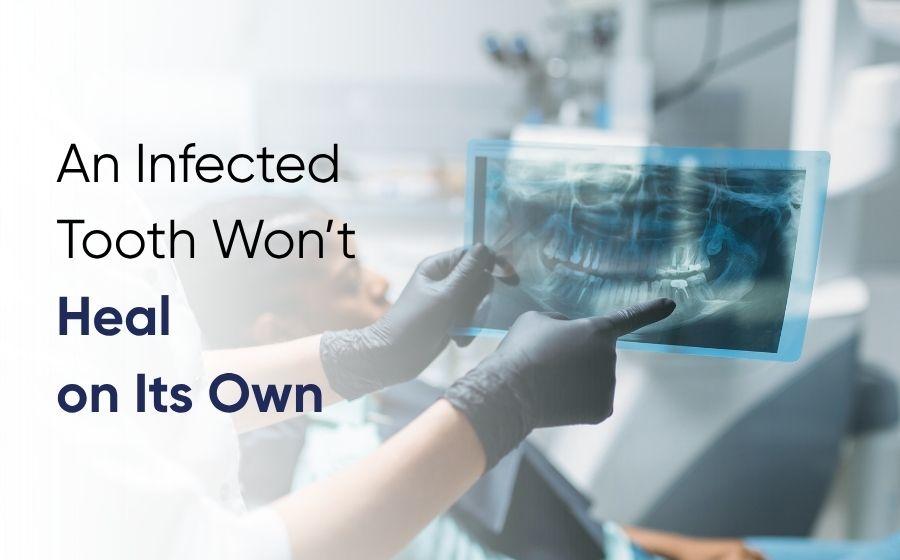
- X-ray. A small radiograph shows the dark area at the root tip where bone has been lost, confirms how many canals the tooth has, and rules out a crack running below the gum.
- Anesthesia. The area is numbed. Infected tissue can be harder to numb, so the dentist may use a different technique or supplement the usual injection.
- Opening and drainage. An access cavity is made through the biting surface. If pus is under pressure, it drains at this point, which is when most people feel the change.
- Cleaning and shaping. The canals are cleaned with fine rotary instruments and disinfected.
- Dressing. A medicated dressing and a temporary filling are placed. Severe cases are left to settle for a week or two before sealing.
- Sealing and restoring. The canals are filled permanently, and the tooth is restored. Back teeth usually need a crown afterward, because a root-treated molar is more brittle than it looks.
Most cases are finished across two visits. A tooth that was badly infected sometimes needs three.
When the Tooth Cannot Be Saved
Honesty is worth more than optimism here. Root canal treatment is not the answer when:
- The tooth is fractured vertically below the gum line
- So little tooth structure remains above the gum that nothing can hold a crown
- The supporting bone has been lost to advanced gum disease, not just the infection
- Repeated treatment on the same tooth has already failed
In those cases surgical tooth extraction is the cleaner decision, and the gap can be restored later. Your dentist will assess which it is before you commit to anything.
If your pain is sharp on chewing but there is no swelling at all, the nerve may be inflamed rather than dead, and the tooth may need less than a full root canal. If the ache sits behind your last molar, that is more often a wisdom tooth than an abscess.
How Much Does Root Canal Treatment Cost in Rawalpindi?
At DentoCorrect, root canal treatment starts from PKR 8,000 for a front tooth, PKR 15,000 for a premolar and PKR 28,000 for a molar. The difference is the number of canals: a front tooth usually has one, a molar often has three or four, each needing separate cleaning and sealing.
For context, directory listings for Rawalpindi in 2026 commonly quote root canal treatment anywhere from roughly PKR 5,000 to PKR 15,000 per session, with the wide spread reflecting which tooth is involved and whether the quote includes the crown afterward. That last point is where most comparisons fall apart. Ask whether the figure covers the X-ray, the number of visits, the permanent filling and the crown, or only the first appointment.
A crown on a back tooth is a separate cost and is not optional in most cases. Budgeting for the root canal alone and skipping the crown is a common way to lose the tooth a year later.
Finding Us in Bahria Town Phase 7
Our Rawalpindi clinic is at Plaza 89, Wallayat Complex, Bahria Town Phase 7, within easy reach of Bahria Town Phases 1 through 7, Chaklala and the surrounding areas. We are open Monday to Saturday, 10:30 AM to 9:00 PM, and closed on Sunday.
If your face is swollen, say so when you call rather than booking online, so the day can be arranged around you: [+92 347 8089764](tel:+923478089764). Full directions are on the Rawalpindi clinic page, and you can read more about the procedure itself on our root canal treatment page.
Our endodontic work is carried out by PMDC-registered dentists using rotary instrumentation, with the same sterilization protocol between every patient.
Frequently Asked Questions
Should I put a hot compress on a swollen face?
No. Heat encourages the infection to spread through the soft tissue. A cold compress on the outside of the cheek for fifteen minutes at a time is safer and helps with discomfort. Rinsing gently with warm salty water inside the mouth is fine, but keep external heat away from the swelling.
Why did the dentist drain the swelling before starting the root canal?
Releasing the pressure does two things: it ends most of the pain immediately, and it reduces the bacterial load so that anesthesia works more predictably. In a tense, acutely infected tooth, numbing alone is often unreliable. Draining first makes the rest of the appointment far more comfortable.
How soon will the swelling go down after treatment?
Most facial swelling reduces noticeably within 24 to 48 hours once the tooth has been opened and drained. A firm area may linger for several days as the tissue settles. Swelling that increases after treatment, or a returning fever, means you should contact the clinic rather than wait.
Is it safe to wait until Monday if the swelling started on Saturday?
If the swelling is limited to the cheek, you have no fever, and you can swallow and open your mouth normally, waiting a day or two is usually acceptable. If it is spreading, your temperature is up, or opening your mouth is becoming difficult, that is an emergency department visit, not a wait.
Can a general dentist treat an abscessed tooth, or do I need a specialist?
Most abscessed teeth are treated by a general dentist with endodontic training. A specialist is usually involved for unusual root anatomy, a tooth that has failed previous treatment, or a canal that is blocked or calcified. Your dentist will tell you at the X-ray stage which applies.
Will I need time off work after the appointment?
Most people go back the same day or the next. The tooth is numb for two to three hours afterward and may feel tender to bite on for a few days. Heavy physical work on the day of an emergency drainage appointment is worth avoiding if you can.
Book an Urgent Appointment in Rawalpindi
If your face is swollen or the painkillers have stopped working, do not wait for it to settle on its own. Call our Bahria Town Phase 7 clinic on [+92 347 8089764](tel:+923478089764) or book an appointment and tell us it is urgent.