
Plaque and tartar
By far the commonest cause. Plaque along the gum line irritates the gums, and once it hardens into tartar it can only be removed by a dentist.

Gums that bleed when you brush or floss are usually the first sign of gingivitis, an inflammation caused by plaque along the gum line. It is common and reversible: gentle brushing, daily flossing and a professional scale and polish usually stop the bleeding within two weeks. Bleeding that continues can mean gum disease that needs treatment.
Bleeding is usually the first warning. These are the signs that your gums need attention:
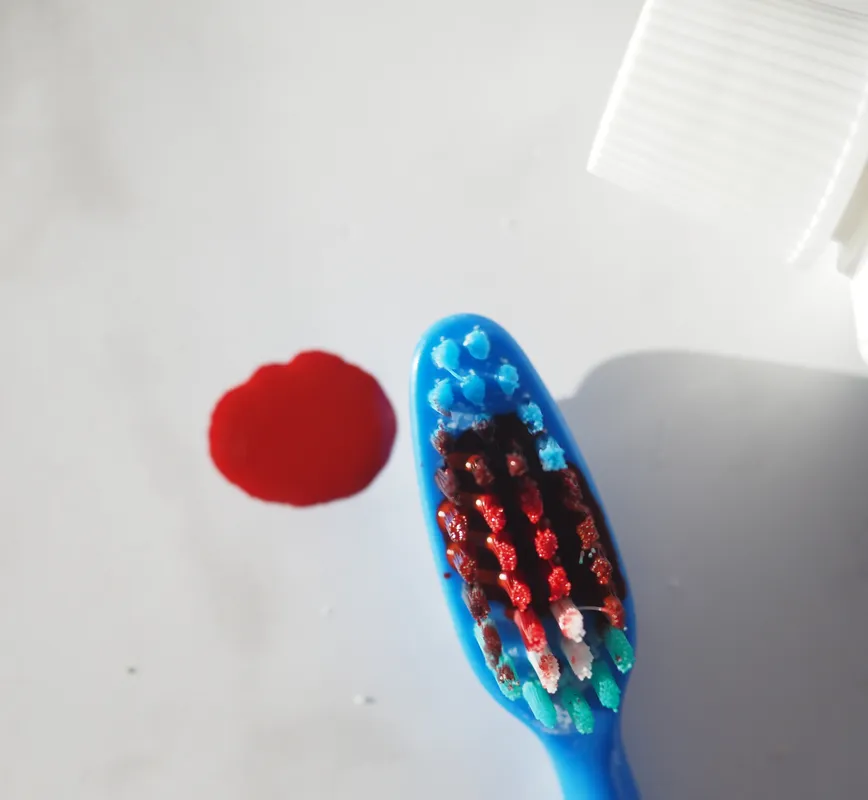
Gum disease is usually painless, so bleeding may be the only warning you get. Don't wait for pain before having it checked.
Book a Free ConsultationMost bleeding gums come down to plaque, but these are the six usual causes:
By far the commonest cause. Plaque along the gum line irritates the gums, and once it hardens into tartar it can only be removed by a dentist.
A hard brush or scrubbing can make gums bleed, and so can flossing for the first time. This settles within a week or two of gentle daily cleaning.
Hormone changes in pregnancy, puberty and while taking some contraceptives make gums swell and bleed much more easily.
Too little fruit and vegetables can leave gums weak and prone to bleeding. Low vitamin K affects how the blood clots.
Blood thinners and aspirin, uncontrolled diabetes and, rarely, blood disorders all make gums bleed more readily.
Tobacco damages gum tissue and speeds up gum disease. It also hides the bleeding, so the problem is found later.
Gum disease moves through three stages. The first is completely reversible; the later ones are not, which is why bleeding is worth acting on early:
Red, swollen gums that bleed when you brush. No bone has been lost yet, and it is fully reversible with a professional clean and good home care.
Scaling and polishingPlaque has spread below the gum, creating pockets and the first bone loss. Gums may recede and breath may smell. A deep clean stops it.
Professional gum cleaningSo much bone is lost that teeth become loose, drift apart or fall out. Treatment saves what it can and replaces what is lost.
Replacing lost teethUsually not, but it is your gums asking for attention. This is how to tell:
Bleeding with easy bruising or tiredness should also be checked by your doctor. Book a gum check-up.
For gingivitis, these steps usually stop the bleeding within one to two weeks:

Home care can't remove tartar that has already hardened. If your gums still bleed after two weeks, book a professional clean.
The dentist checks how deep your gum pockets are and whether any bone has been lost, then treats the cause. These are the treatments we use at DentoCorrect:


Removes plaque and tartar above and just below the gum line. For gingivitis this is usually all that is needed to stop the bleeding.

For periodontitis, tartar is cleaned from the roots deep inside the gum pockets under local anaesthetic, so the gums can reattach.

Old fillings or crowns with rough or overhanging edges trap plaque at the gum line and are smoothed or replaced.

Once the gums are healthy, teeth lost to gum disease can be replaced with implants, bridges or dentures.
DentoCorrect is Pakistan's ISO-certified, multi-city dental clinic network with qualified dentists at every location. Here is what sets us apart:
Experienced dentists at every DentoCorrect clinic
Gum pockets measured, not just a quick look
Strict safety and sterilisation protocols at every clinic
Numbing available for sensitive gums and deep cleans

You'll know what's needed and what it costs before we begin

Lahore (Johar Town, Gulberg & DHA), Islamabad, Rawalpindi, Karachi, Faisalabad, Peshawar, and Multan
Usually not at first. It most often means gingivitis, an early, reversible gum inflammation. But it shouldn't be ignored: left alone, gingivitis can turn into periodontitis, which destroys the bone holding the teeth and can make them loose.
No. Bleeding is caused by plaque, and avoiding the area lets more plaque build up. Keep brushing gently with a soft brush and floss every day; the bleeding usually reduces within one to two weeks as the gums heal.
A lack of vitamin C (found in citrus fruit, guava and tomatoes) is the best known, and low vitamin K can also make you bleed more easily. Deficiency is a less common cause than plaque, so have your gums checked too.
Pregnancy hormones make the gums react more strongly to plaque, so they swell and bleed easily. This is called pregnancy gingivitis. Brush and floss carefully, and a professional clean is safe during pregnancy.
Inflamed gums can bleed slightly overnight, especially if you breathe through your mouth and your mouth dries out. If it happens often, or with no obvious gum problem, see a dentist, and see a doctor if you also bruise easily.
With good brushing, daily flossing and a scale and polish, gingivitis usually settles within one to two weeks. If your gums still bleed after that, there may be deeper gum disease that needs treatment.
A fluoride toothpaste made for gum care, used with a soft brush, is a good start. A dentist may recommend an antibacterial mouthwash such as chlorhexidine for a short time. Neither removes tartar, which needs a professional clean.
Rarely. Gums that bleed heavily for no reason, together with easy bruising, tiredness or frequent infections, can be a sign of a blood condition. In that case see your doctor as well as your dentist.
Smoking damages the gums and is a major cause of gum disease, but it reduces blood flow, so smokers' gums may bleed less and hide the problem. Smokers should have their gums checked regularly even if they don't bleed.
In Urdu it is called masoorhon se khoon aana (مسوڑھوں سے خون آنا). The early gum inflammation is called gingivitis, and advanced gum disease is periodontitis.