Dental Implants in Islamabad: Restore Chewing After Tooth Loss
A missing back tooth does not show, which is exactly why it gets left. Nobody sees the gap, nothing hurts, and chewing shifts to the other side without a decision ever being made. Patients asking about dental implants in Islamabad are often two or three years past that point, and what finally brings them in is not appearance. It is that one side of the mouth now does all the work, meals have quietly narrowed to softer things, and the tooth opposite the gap has started to feel strange.
Signs You Have Stopped Chewing on One Side
Most people do not notice the switch. Check against this list instead:
- Food always goes to the same side without you deciding
- Meat, naan crusts or raw salad have quietly left your plate
- Food packs into the gap or beside it after every meal
- A tooth on the opposite side feels longer or catches when you close
- Aching in the jaw joint on the chewing side, especially in the morning
- A tooth next to the gap has tilted, so floss now catches or shreds
- Sensitivity on the overworked side, from teeth taking more force than they were built for
Any three of those together is the pattern we see most often in patients with a missing molar.
What the Mouth Does When a Back Tooth Goes Missing
Teeth hold each other in position. Remove one and the arrangement slowly reorganises around the gap:
- The teeth behind drift forward, tipping rather than sliding, which opens angled spaces that trap food
- The tooth opposite over-erupts, growing down or up into the empty space because nothing meets it
- The bone that held the root resorbs, fastest in the first year
- The remaining teeth absorb more load, and wear, cracks and fractures follow over time
None of this happens quickly. It happens over months and years, which is why the gap feels harmless right up until the dentistry needed to fix it has doubled.
Why an Implant Chews Differently From a Denture
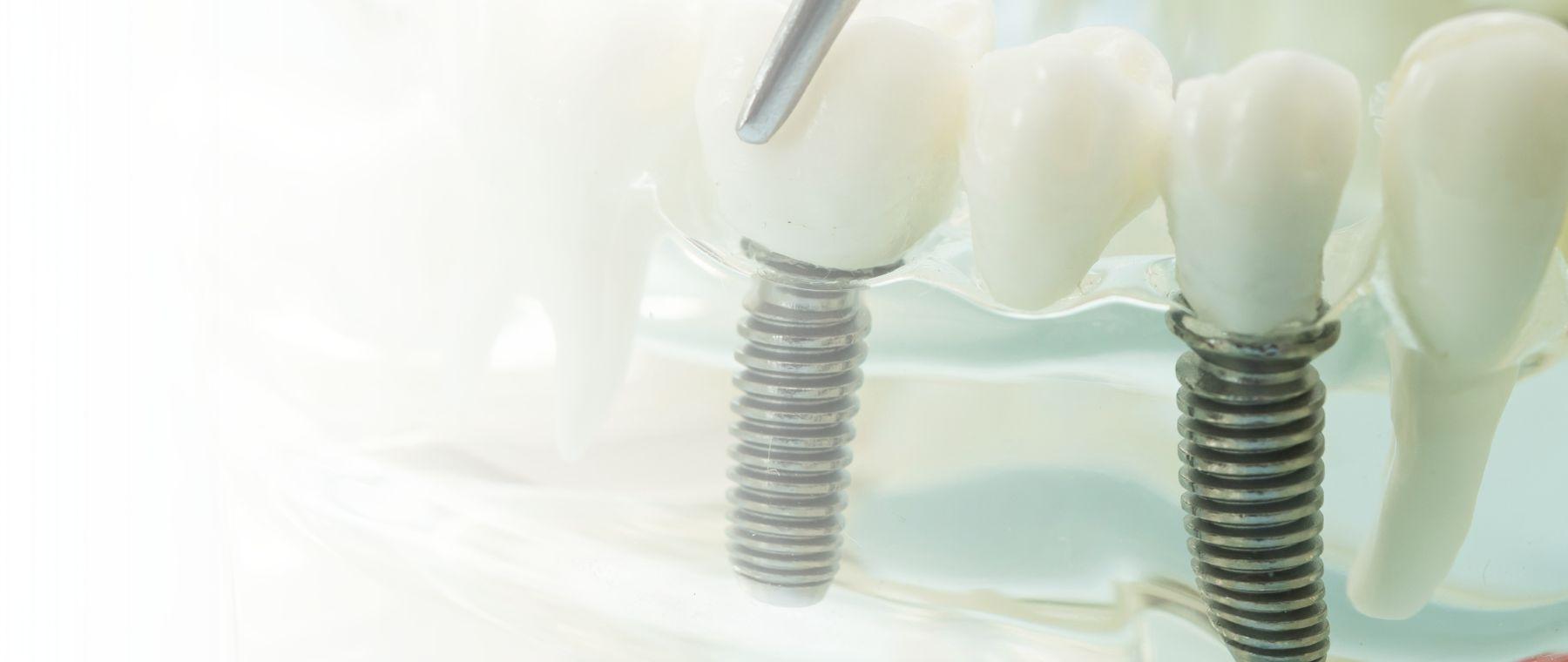
A denture rests on the gum and is held by suction and clasps, so chewing force presses into soft tissue. An implant is a titanium post fused into the jawbone, so force travels through bone the way a natural root does.
That difference is why patients describe an implant as feeling like a tooth rather than an appliance, and why a partial denture replacing one back tooth often ends up in a drawer. Our guide to dentures in Peshawar is honest about what removable options can and cannot restore.
How Much Chewing Power Comes Back?
Most patients describe chewing on an implant as close to normal, and considerably better than a removable partial denture, because the force passes through bone rather than gum. Full confidence usually returns a few weeks after the crown goes on, once you stop guarding the side. Hard foods like nuts and bones remain worth avoiding, as they are with natural teeth.
The Timeline Before You Can Chew Normally
This is where expectations most often go wrong. An implant is not a single appointment:
- Assessment and X-ray or scan, to measure bone height and width
- Placement, usually under local anesthetic, taking under an hour for a single implant
- Healing and integration, typically three to six months while bone grows onto the post. Nothing is chewed on it during this time
- Abutment and crown, once integration is confirmed
- Review, and then normal chewing
If bone grafting is needed first, add several months. A clinic quoting you a finished tooth in two weeks is describing something else.
If You Only Have One Gap at the Back
An implant is not automatically the answer. A bridge uses the teeth either side as supports, which is quicker and cheaper, but it means cutting down two teeth that may be perfectly healthy. The honest comparison:
- Implant: nothing done to neighbouring teeth, preserves bone, takes months, costs more
- Bridge: weeks not months, costs less, but two healthy teeth are reduced and the bone under the gap still shrinks
- Nothing: free today, and the drift and over-eruption above are what you pay with
If the teeth either side already have large fillings or crowns, a bridge makes more sense than it does when they are untouched.
Who Should Wait, and Who Should Not Have One
- Active gum disease. Implants fail in inflamed tissue. Treated and stable first, always.
- Not enough bone height. Grafting may make it possible, or a different plan may be better.
- Uncontrolled diabetes. Healing and integration are affected; controlled diabetes is usually fine.
- Heavy smoking. It measurably raises the failure rate, and your dentist should say so plainly rather than take the booking quietly.
- Teenagers. The jaw must finish growing first.
- Heavy grinders. Possible, but a night guard becomes part of the plan.
What Happens at DentoCorrect
- Examination and imaging. Bone volume, the position of the nerve in the lower jaw, and the health of the neighbouring teeth.
- Written plan. Number of implants, whether grafting is needed, the full timeline and an itemized cost, before anything begins.
- Placement. Local anesthetic, the post placed and the gum closed. Most patients return to work the next day.
- Integration period. Reviews during healing; a temporary tooth where appearance matters.
- Crown fitting. Scan, then the crown fitted and the bite adjusted carefully, since an implant has no ligament to absorb a high bite.
Our dentists at the F-8 Markaz clinic are PMDC-registered and every implant is planned from imaging rather than from the chair.
Dental Implants in Islamabad at Our F-8 Markaz Clinic
DentoCorrect Islamabad — 1st Floor, Kashif Plaza, F-8 Markaz. Call [+92 347 4623620](tel:+923474623620).
The clinic is central for F-6, F-7, F-10, F-11, G-9, Blue Area and the Margalla Road corridor, with imaging on site so assessment and planning happen in one visit. Full directions are on our Islamabad dental clinic page. If the tooth in question is still present but painful, our guide to root canal treatment in Islamabad covers saving it instead, which is almost always the better outcome.
For multiple gaps, our Faisalabad implant guide explains why you usually need fewer implants than you have missing teeth.
How Much Does a Dental Implant Cost in Islamabad?
At DentoCorrect a single tooth implant starts from PKR 80,000, an implant-supported bridge from PKR 200,000 per arch, and a full arch from PKR 500,000. The consultation is free and the quote is written before treatment begins.
For context, published prices in Islamabad in 2026 commonly run from about PKR 60,000 to PKR 150,000 for a single implant, with full-mouth solutions from roughly PKR 500,000 upward.
What moves the figure is the implant system used, whether grafting is needed, and the crown material. Ask whether a quote includes the abutment and the crown, because a figure covering only the post is roughly half the real cost and is the most common reason a cheap quote is not what it appeared to be. More detail is on our dental implants treatment page.
Frequently Asked Questions
Can I eat normally while the implant is healing?
Not on that side. The post needs three to six months undisturbed for bone to grow onto it, and loading it early is a common cause of failure. You eat normally on the other side, and soft food for the first few days after placement. Where the gap shows, a temporary tooth can be fitted.
Will the implant feel like my own tooth?
Close, with one difference. A natural tooth sits in a ligament that cushions it and senses pressure; an implant is fused directly to bone and has none. Most patients stop noticing within weeks, but it is why the bite is adjusted so carefully and why a night guard matters if you grind.
What if the opposite tooth has already grown down into the gap?
It happens whenever a gap is left for years, and it has to be dealt with before a crown will fit the space. Options are reshaping the over-erupted tooth, crowning it to restore a proper biting surface, or occasionally moving it orthodontically. Your dentist will measure the available height first.
Can the implant go in the same day the tooth comes out?
Sometimes, called immediate placement, and it needs enough healthy bone and no active infection at the site. It saves months when conditions allow. If there is infection or the socket walls are thin, the site is left to heal first, which is a clinical judgement rather than a preference.
Does the implant need its crown straight away?
No, and usually it should not have one. The post is left to integrate with the bone for three to six months before the crown is attached. Immediate loading exists for specific cases with excellent bone, but as a default it raises the risk of the implant failing to integrate.
Will a missing back tooth affect my front teeth?
Over time it can. As back teeth drift forward the whole arch shifts, and front teeth may crowd or splay as they absorb forces the missing molar used to take. It is gradual and easy to miss. This is one of the better reasons not to leave a back gap indefinitely, even though nobody can see it.
Book an Implant Consultation in Islamabad
If you have been chewing on one side for a year or more, the gap is already changing the teeth around it. An assessment with imaging will tell you how much bone is left and whether an implant, a bridge, or leaving it alone is the right call for your mouth.
Call [+92 347 4623620](tel:+923474623620) or book an appointment online at our F-8 Markaz clinic. The consultation is free and includes a written plan.