How Clear Aligners Move Teeth
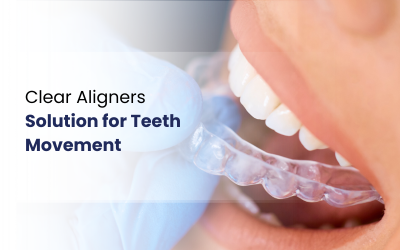
Orthodontics has evolved significantly in the past decade, and one of the most transformative innovations is the use of clear aligners. Many patients today prefer these nearly invisible plastic trays because they provide a discreet, comfortable, and effective way to achieve proper teeth alignment without traditional metal braces.
However, a common question patients ask is. How aligners move teeth? Understanding the biological and mechanical principles behind this treatment helps patients appreciate the science of modern orthodontics and increases confidence in the treatment process.
Types of Tooth Movements Achieved with Clear Aligners
Modern clear aligners are capable of performing multiple orthodontic movements when properly planned. These include:
- Rotation: Turning teeth into proper orientation
- Intrusion: Moving teeth slightly into the bone
- Extrusion: Bringing teeth outward
- Bodily movement: The entire tooth (crown and root moves in one direction
- Space closure: Closing gaps between teeth
- Arch expansion: Widening the dental arch for improved teeth alignment
While highly effective, the success of these movements depends greatly on proper case selection, digital planning, and patient compliance.
How Clear Aligners Apply Controlled Forces
Unlike traditional braces that rely on metal brackets and wires, clear aligners use a series of customized trays designed specifically for each patient. These trays are created using digital technology and are planned to move teeth gradually into their correct positions.
Each aligner is designed with small, controlled incremental movements, typically around 0.25–0.33 mm per stage for linear displacement. These movements are distributed across multiple aligners depending on the type and complexity of tooth movement, allowing safe adaptation of the surrounding bone and tissues. The process works as follows:
Digital Treatment Planning
Using 3D scans, orthodontists create a detailed digital model of the patient’s teeth and simulate the complete teeth alignment process. This planning helps determine the exact sequence of movements required to achieve the desired result.
Sequential Aligner Series
A series of clear aligners is then fabricated, with each aligner representing a specific stage of tooth movement. Every tray is slightly adjusted to continue the progress made by the previous aligner.
Gradual Pressure Application
Each aligner fits snugly over the teeth and applies gentle, targeted pressure to certain teeth, encouraging them to move toward their planned position.
Progressive Tooth Movement
Patients usually switch to a new aligner every 10 days, allowing teeth to move gradually and predictably toward their final alignment. This staged approach ensures safe, controlled, and predictable orthodontic outcomes while maintaining comfort and efficiency during treatment.
Importance of Patient Compliance
One of the key factors that determine how effectively clear aligners move teeth is patient cooperation.
Aligners must typically be worn 20–22 hours per day to maintain consistent orthodontic force. Removing them too often or failing to follow the recommended schedule can slow treatment progress or cause unwanted tooth movements. Patients should also
- Maintain excellent oral hygiene
- Attend regular follow-up appointments
When used correctly, clear aligners can produce predictable and stable orthodontic results.
The Role of Attachments and Auxiliaries
In many cases, orthodontists place small tooth-colored composite attachments on certain teeth to improve aligner performance. These attachments help aligners:
- Apply more precise rotational forces
- Achieve complex tooth movements
- Improve grip on the tooth surface
For more advanced orthodontic corrections, additional auxiliaries may also be used, including:
- Attachments
- Elastic Button Technique (EBT)
- Bite ramps / turbos
These techniques expand the capability of clear aligners to treat a wider range of orthodontic problems.
Considering Clear Aligners for Your Teeth Alignment
If you’re considering clear aligners to straighten your teeth, it’s important to consult with your orthodontist to determine whether you’re a good candidate for this treatment. At Dentocorrect, with clinics in Lahore and Islamabad, we specialize in providing personalized treatment plans to help you achieve the smile you’ve always wanted. Your orthodontist will evaluate your unique dental needs and guide you in making the best choice for your smile.
Whether you’re looking for a more discreet option for teeth alignment, or seeking comfort and flexibility, clear aligners could be the right solution. With the advancements in orthodontic technology and personalized treatment planning at Dentocorrect, achieving the smile you’ve always wanted is more achievable than ever.
Frequently Asked Questions